 Isabella Miller
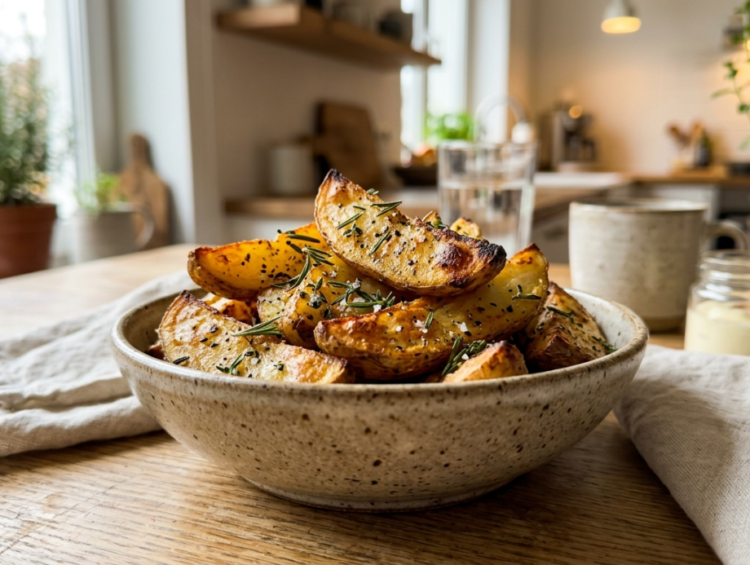
 Frying potatoes is the habit most people never question because nobody showed them what the oven could do instead. The crunch lands the same way, the satisfaction feels identical, and there is no pot of oil to deal with afterward. Try this once and going back to the old way stops making any sense.
Any Potato Works
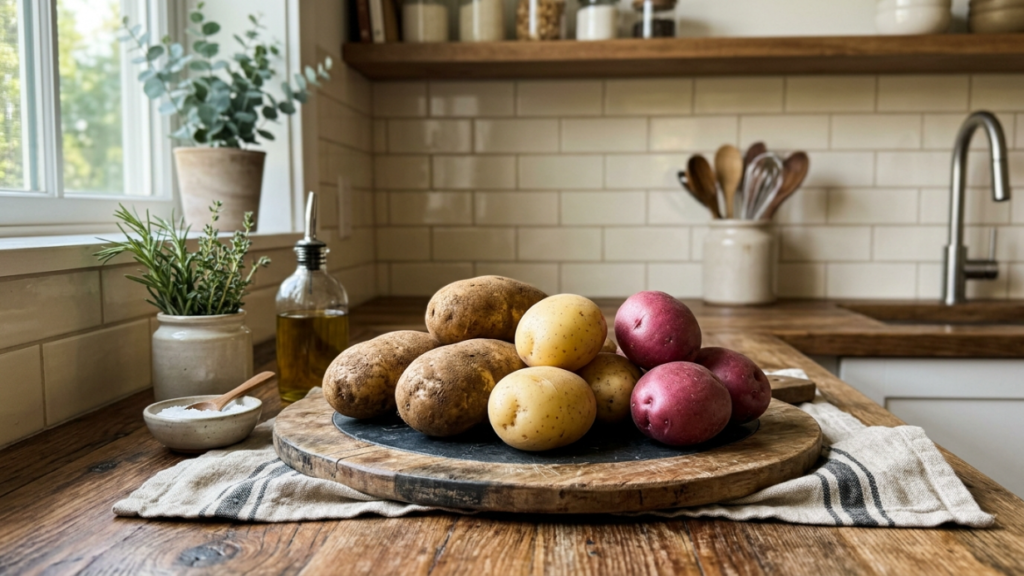
Whatever is sitting in the kitchen right now is fine. The variety matters less than making sure everything coming off the cutting board is roughly the same thickness before it goes anywhere near heat.
Size Consistency Is Everything
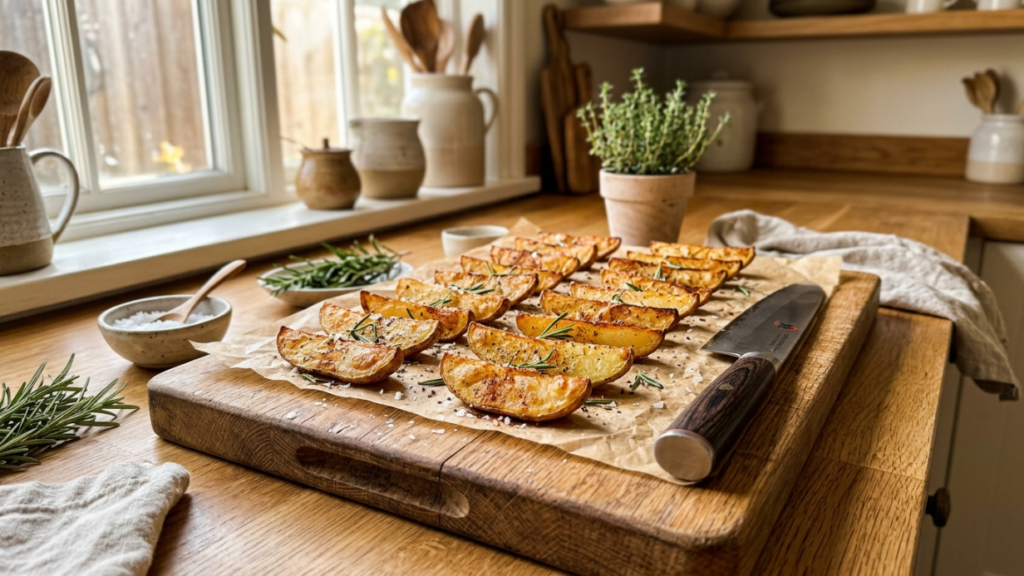
Rounds, wedges, or cubes depending on what feels right. What the shape cannot do is vary dramatically across the same tray because uneven pieces mean some finish early and some never catch up.
Cold Water Soak First
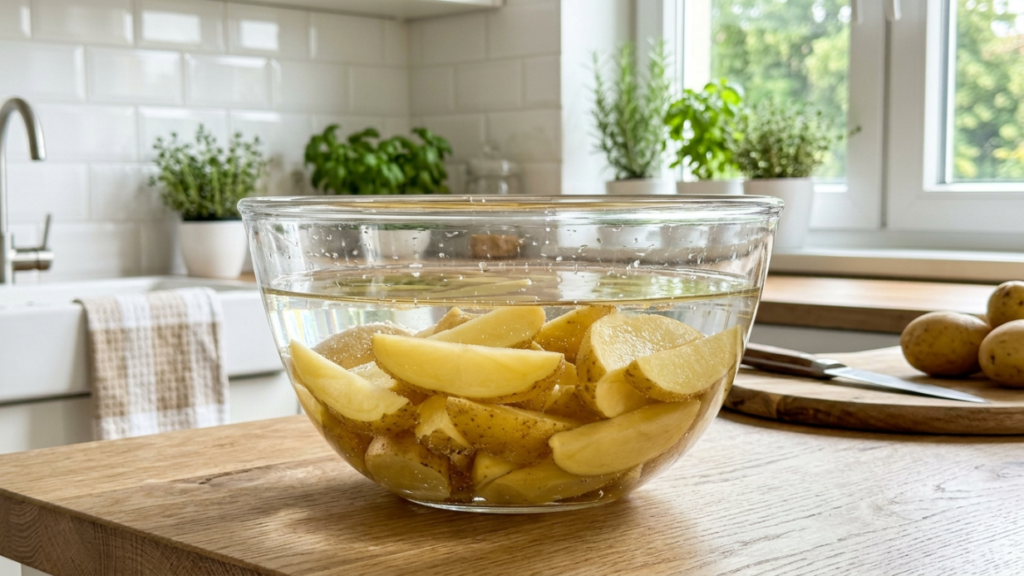
Pieces go into cold water for a minimum of thirty minutes before anything else happens. Starch comes out during that soak and starch is what keeps potatoes from crisping up no matter what temperature the oven runs at.
Dry Like It Actually Matters
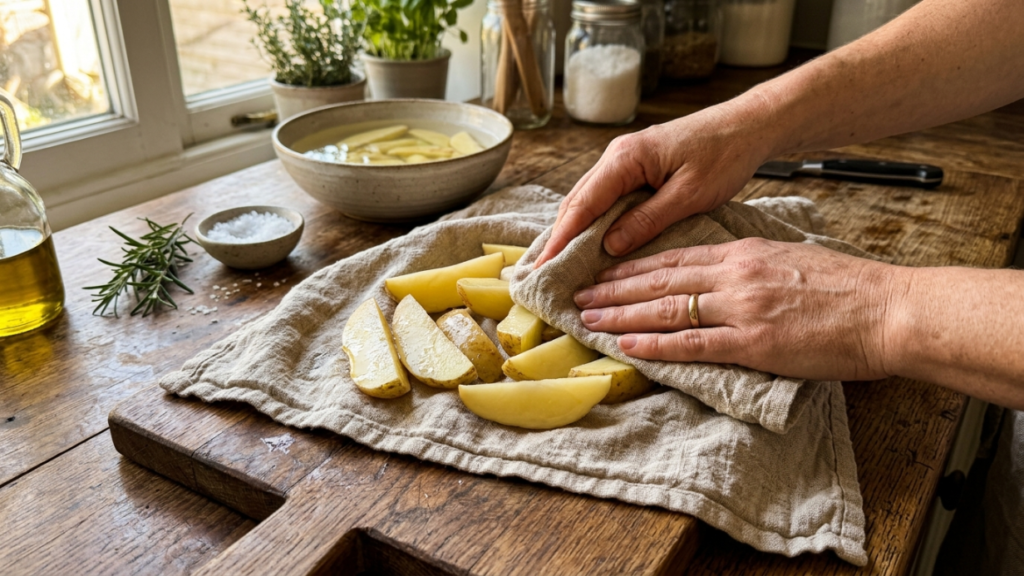
Everything comes out of the water and gets dried properly with a kitchen towel. Water left behind becomes steam inside the oven and steam is the exact thing standing between these potatoes and the crust they are capable of forming.
Oil Then Seasoning
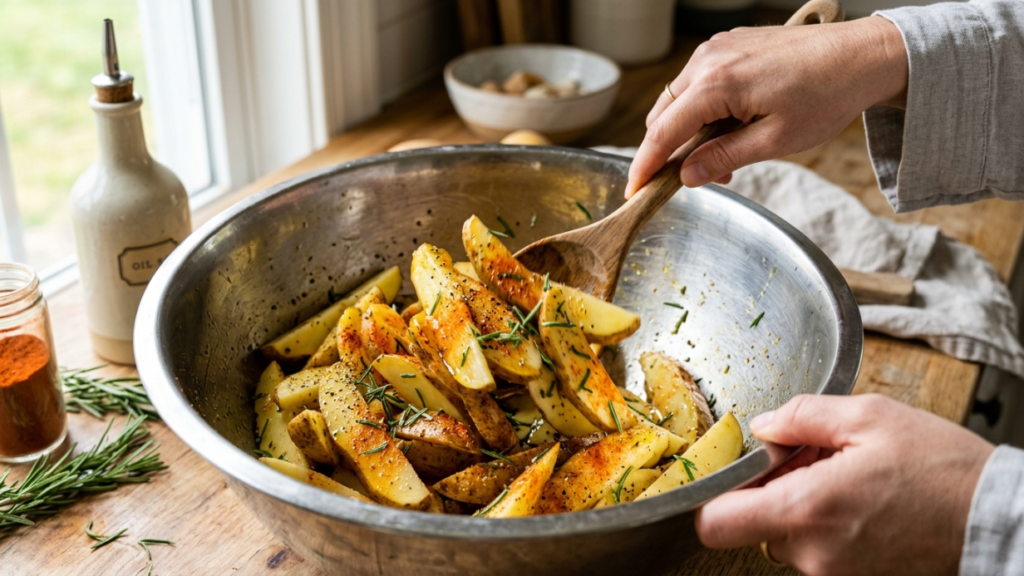
A generous mist of olive oil goes over the entire section first until there is a light coat around each piece. Salt, garlic powder, paprika, and black pepper match and the whole lot gets tossed until the seasoning reaches each bottom. Fresh thyme or rosemary thrown in here does something that the dried varieties in jars don’t really change in any way.
Temperature Has to Be High
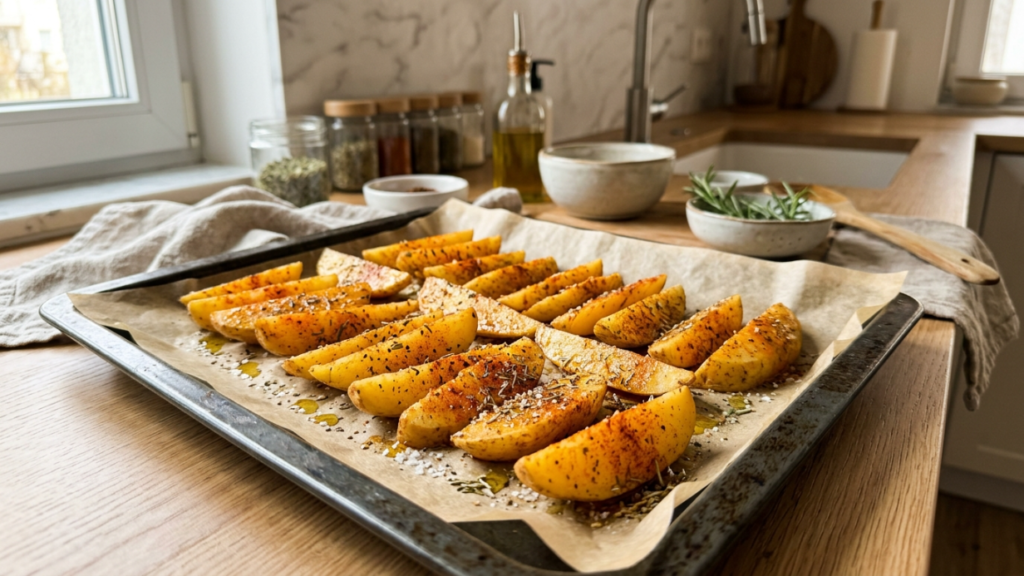
220 Celsius or 425 Fahrenheit and nothing lower than that. Lower temperatures cook the potato through before the outside ever gets a chance to develop anything worth calling crispy. The heat is what creates the crust and the crust is the whole reason to make this.
Room Between Every Piece
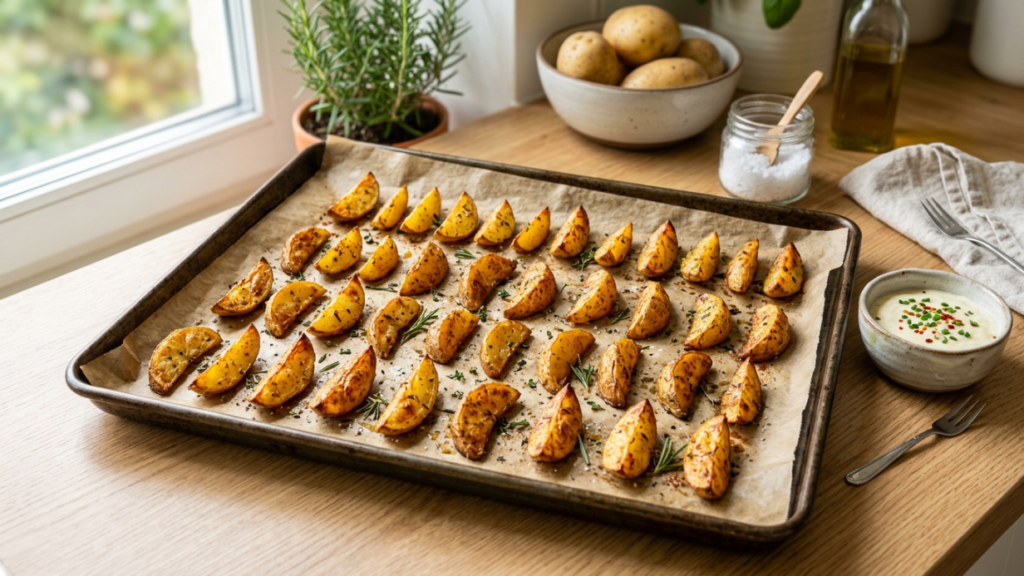
One layer across the tray and actual space between each piece. Crowding keeps moisture trapped around everything and the result is soft potatoes regardless of how long they stay in the oven or how high the temperature runs.
One Flip Halfway Through
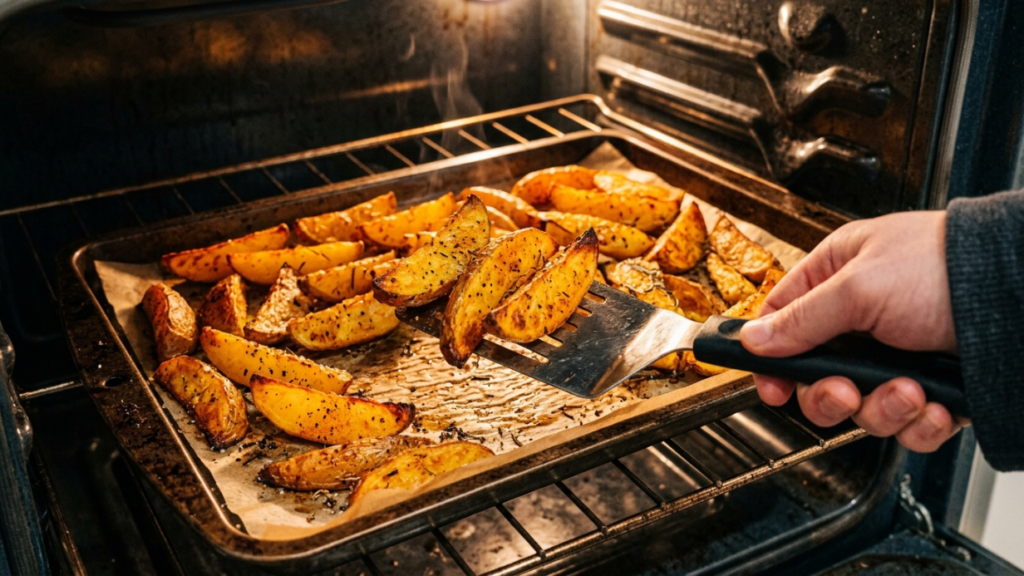
About twenty minutes on the first side then everything flips for another fifteen to twenty on the second. Direct contact with the hot tray surface on both sides is what produces even color and crunch across the whole batch.
Herbs Go On After Not Before
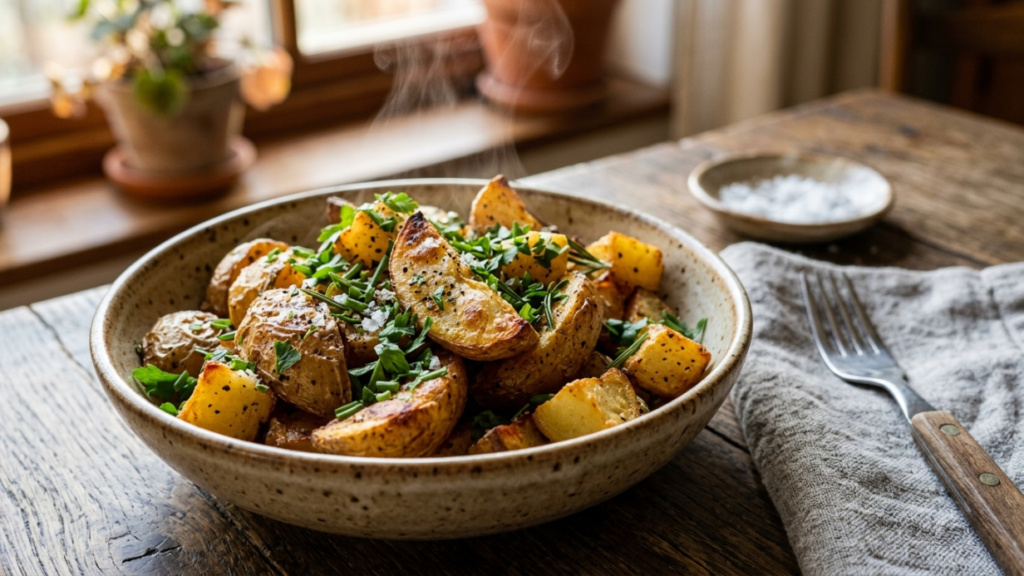
Fresh parsley or garlic delivered right after the tray comes out will remain intact and love the flavors of course. Any steps taken before cooking at this temperature will burn the potatoes before they are done and contribute nothing well worthwhile to the final result.
A Quick Sauce on the Side
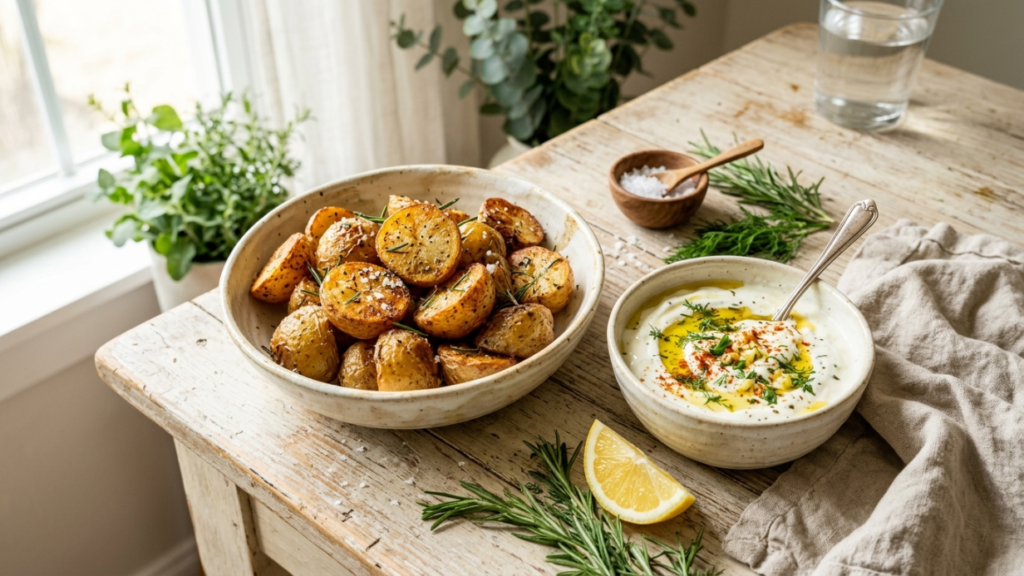
Yogurt with a squeeze of lemon, a clove of garlic crushed in, some salt, and a small pour of olive oil stirred together. Ready in two minutes and genuinely better alongside these than anything sold in a bottle at the store.
Why Skip the Frying Pan
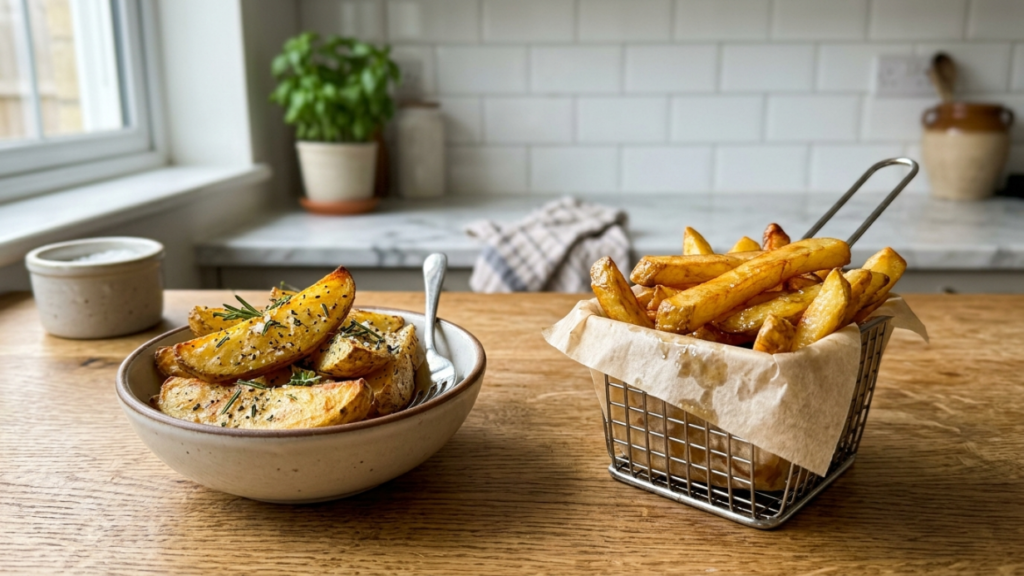
No pan of hot oil to manage, no splatter across the kitchen, no heaviness sitting in the stomach an hour after eating. Cooked at a high temperature with proper education they pop out crunchier than most rice versions and keep that texture an awful lot long after they leave the oven.