 Sophia Davis
 People do not understand woodpeckers because they think of these birds as tree-destroying pests, these birds create distressing sounds through their drumming and drilling activities but their connection to the forest environment operates through a complicated system of relationships. Woodpeckers conduct their primary function as doctors who assess health conditions instead of behaving like people who inflict harm upon others.
They need to find insects to feed themselves
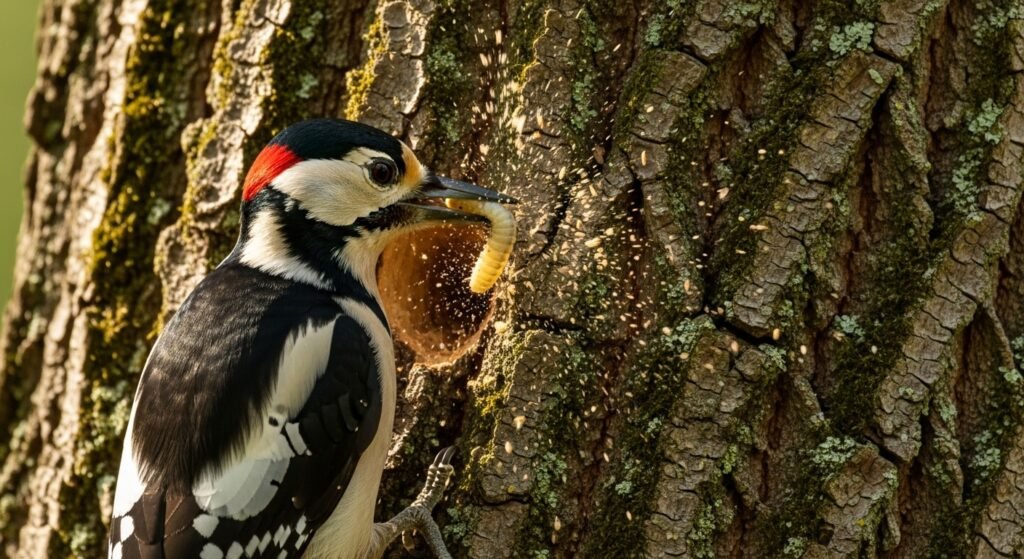
A woodpecker drills deep holes into a tree trunk after observing that the tree has wood-boring insects infesting its interior, this bird isn’t trying to hurt the tree and it is trying to eat the pests, such as carpenter ants or beetle larvae, that are already damaging the inner wood.
The Sapsucker exception
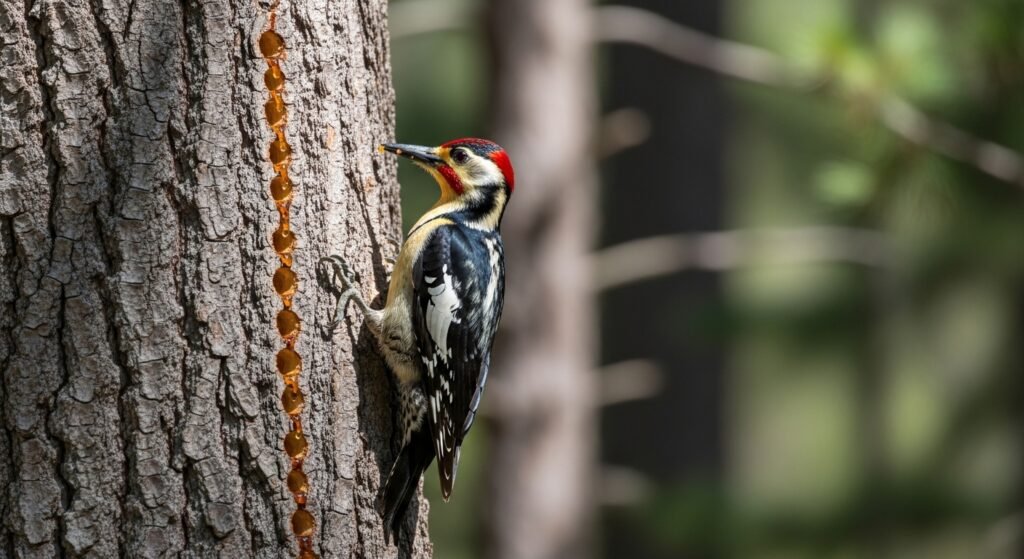
The woodpecker species known as Sapsucker creates small shallow holes which she uses to extract tree sap. A tree will experience damage from excessive “wells,” but a mature tree will survive unless its trunk receives complete circumferential drilling.
They prefer dying wood
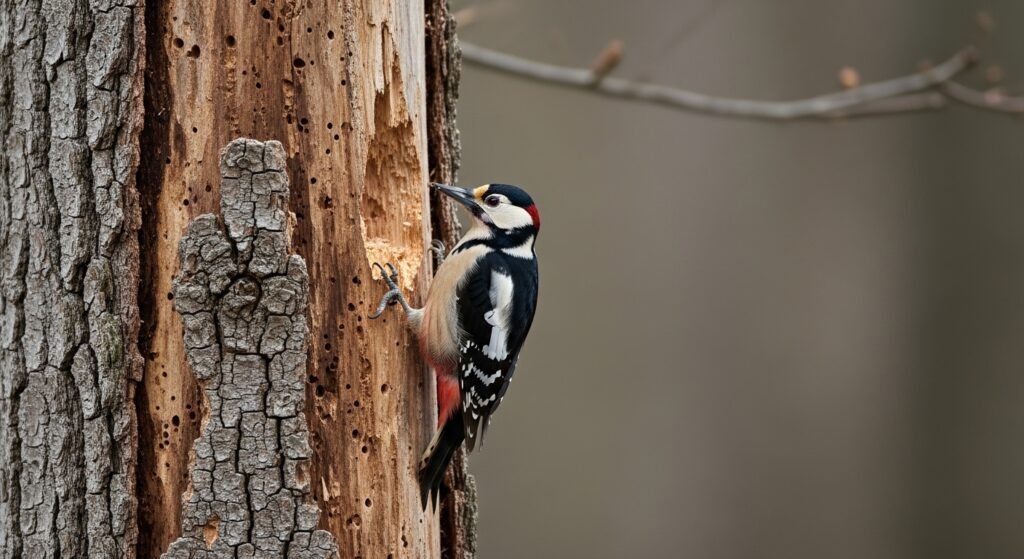
Woodpeckers use their excellent hearing ability to detect the sounds made by insects that tunnel through wooden materials. The adult woodpecker uses his strong beak to create deep holes in dead wood because most of the wood has become soft and the bugs have reached their highest levels. The symptoms they show often indicate that a tree already exists in a state of decline.
Drumming is not drilling
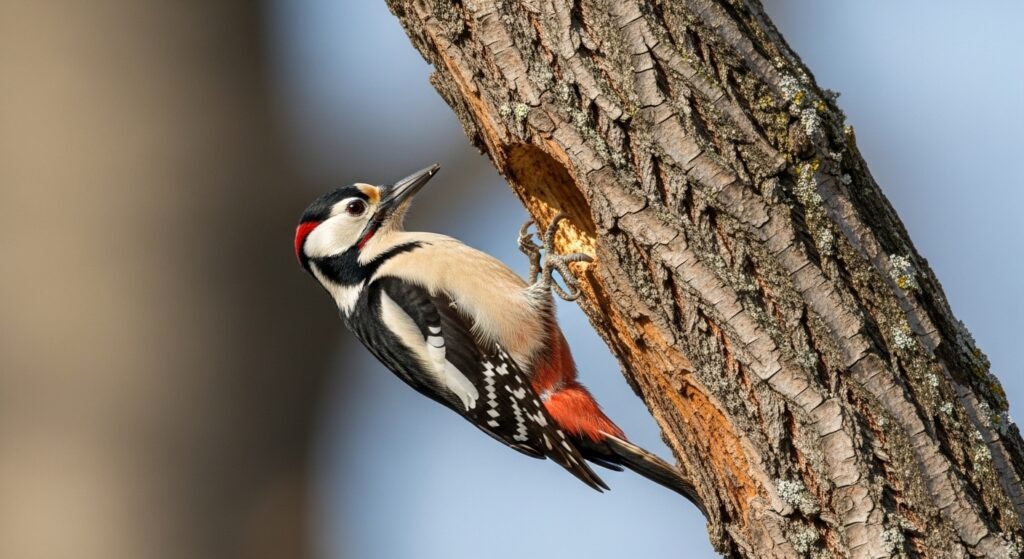
The woodpecker uses its beak to create rapid drumming sounds on hollow branches and metal gutters. The behavior creates sounds which help to establish boundaries between territories and foster mate attraction. The drumming activities of woodpeckers do not cause any structural damage to the tree.
Creating “Home” for others
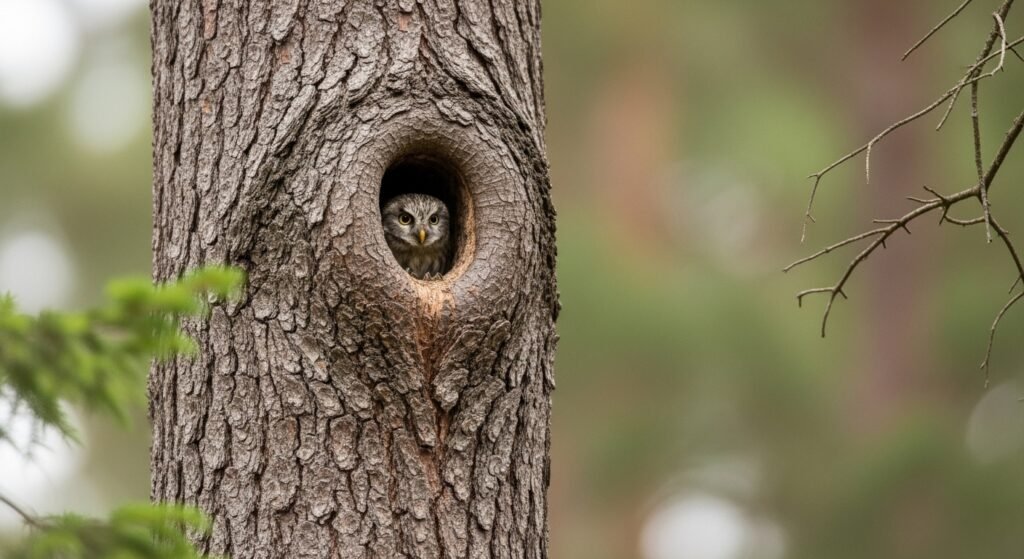
The woodpecker creates an essential habitat for the forest when it digs a big hole to build its nest. After the woodpecker vacates his nest site, the resulting holes serve as nesting locations for bluebirds and squirrels and owls. The process of creating a nesting hole which creates a big opening in the tree trunk establishes the fundamental ecological element of a forest.
The risk of secondary infection
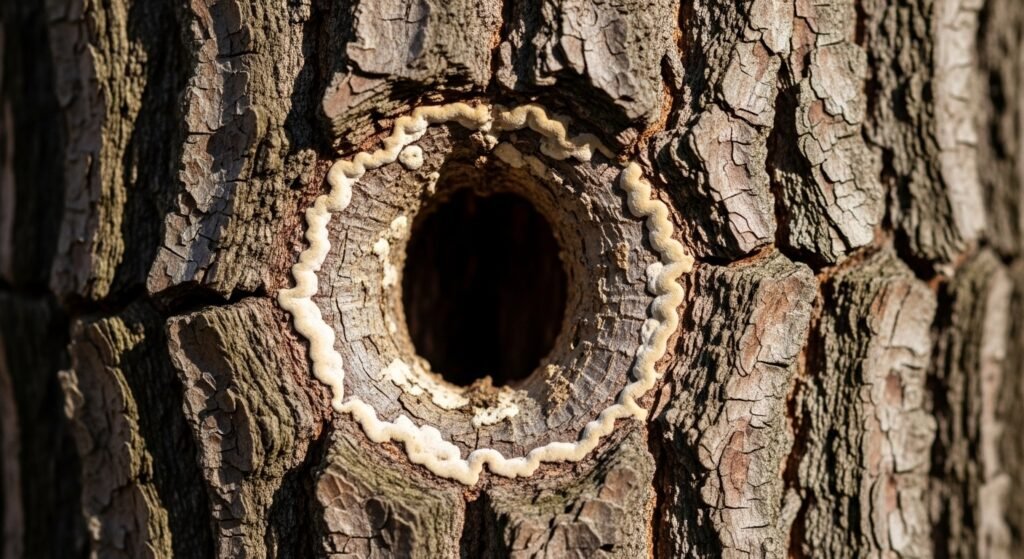
The woodpecker holes pose their main threat because they create openings that permit entry to other harmful entities. The open wounds can permit fungi, bacteria and other diseases to enter the bark area. The tree can fend off most disease organisms which attempt to penetrate its system.
Protection through sap
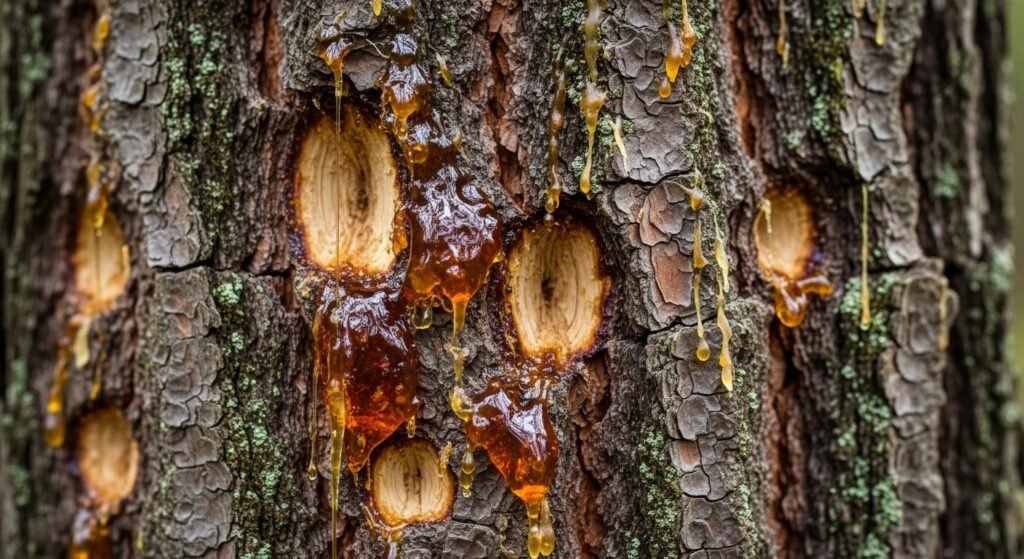
Pines and firs produce thick sticky sap which functions as a protective mechanism against tree wounds. The woodpecker pecking at the tree causes it to release resin which creates an insect trapping barrier that seals the wood and allows the tree to restore itself.
The health of your garden depends on woodpeckers
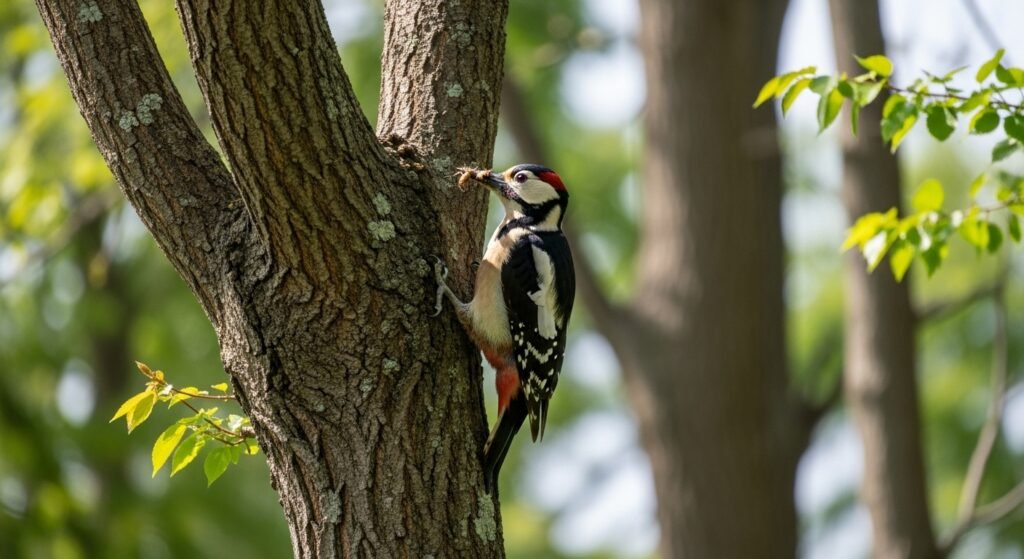
Woodpecker presence provides garden owners with pest control as the birds eliminate unwanted insects without the need for toxic chemicals. Their consumption of invasive wood-boring beetles allows them to protect entire forests from insect invasions which could lead to forest extinction.
Structural integrity is rarely compromised
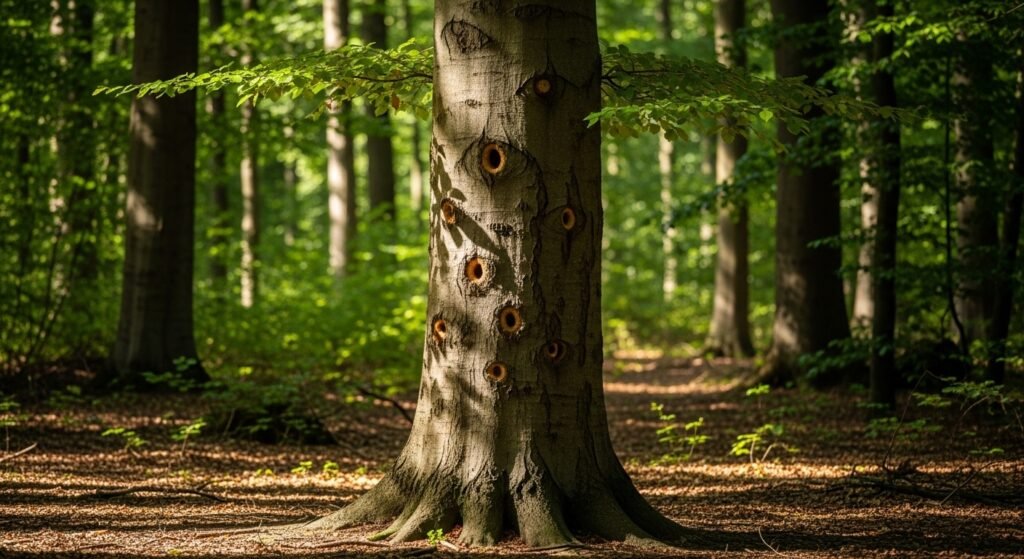
The tree becomes unsafe when woodpecker holes occur at multiple points but the damage will only become evident after the tree reaches an advanced stage of decay. Woodpeckers disrupt the tree’s outer layers and solid core section, which serve as structural components, at minimal levels.