 Isabella Miller
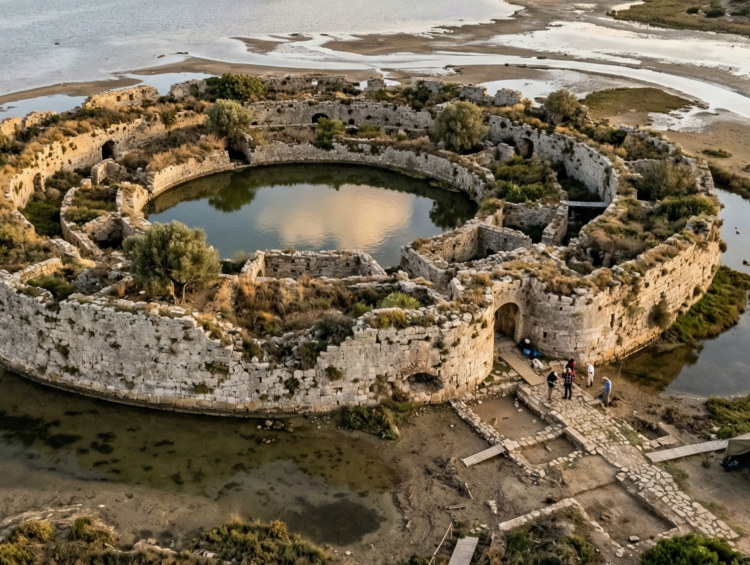
 The Motya archaeological site on San Pantaleo island reveals a substantial fortress which dates back 5,000 years according to archaeologists who recently discovered the site. The discovery of the structure has changed historical understanding because it was misidentified as a basic harbor but actually functioned as a complex military facility.
The Circular Design
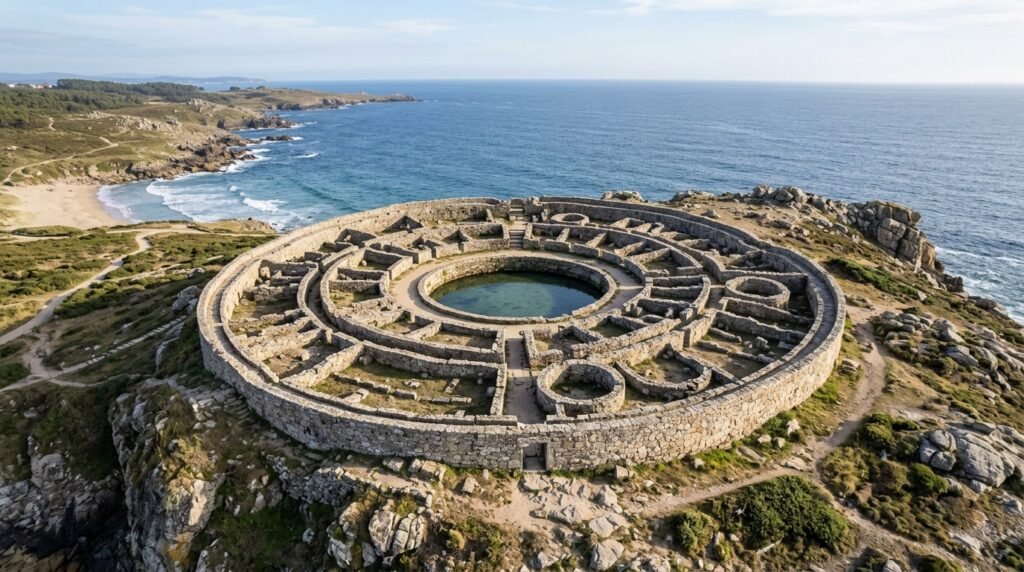
The fortress was designed using an uncommon circular pattern which created its center point at a sacred water pool. The Bronze Age civilization designed the layout which allowed defenders to observe all possible invader approaches through its watchtowers.
Hidden by the Lagoon
The Stagnone Lagoon’s rising sea levels together with its shifting silt functioned as an effective natural preservation method. The fortress preserved its stone foundations for five thousand years because mud and water created a vacuum-sealed effect which protected the structure in the same way that volcanic ash protected the city of Pompeii.
The Sacred Pool Discovery
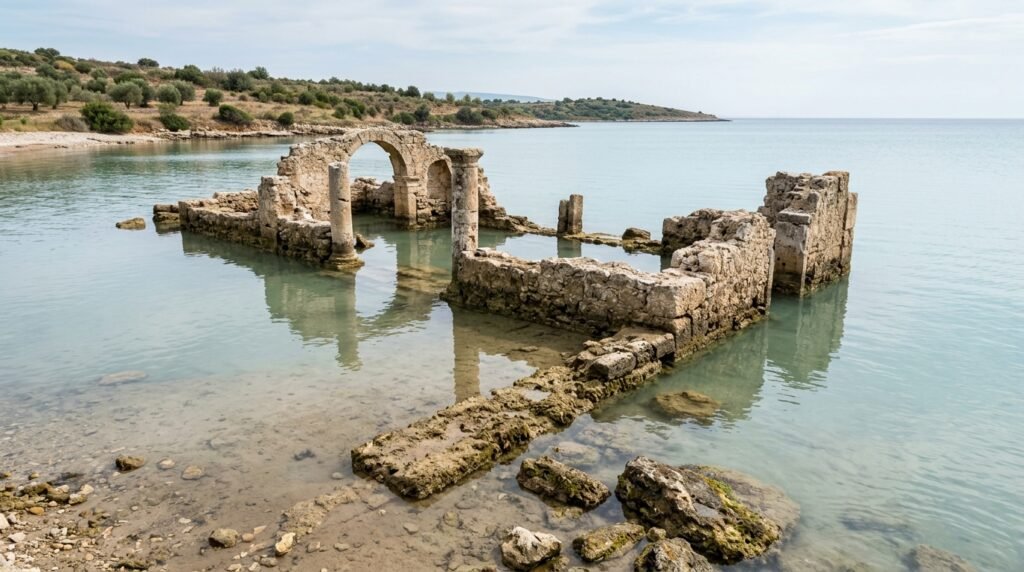
The central water feature was originally believed by researchers to function as a Kothon which serves as an artificial harbor. The new excavations discovered that the site contained a freshwater spring which served religious purposes thus transforming the fortress into both a military base and a sacred space.
Massive Defensive Walls
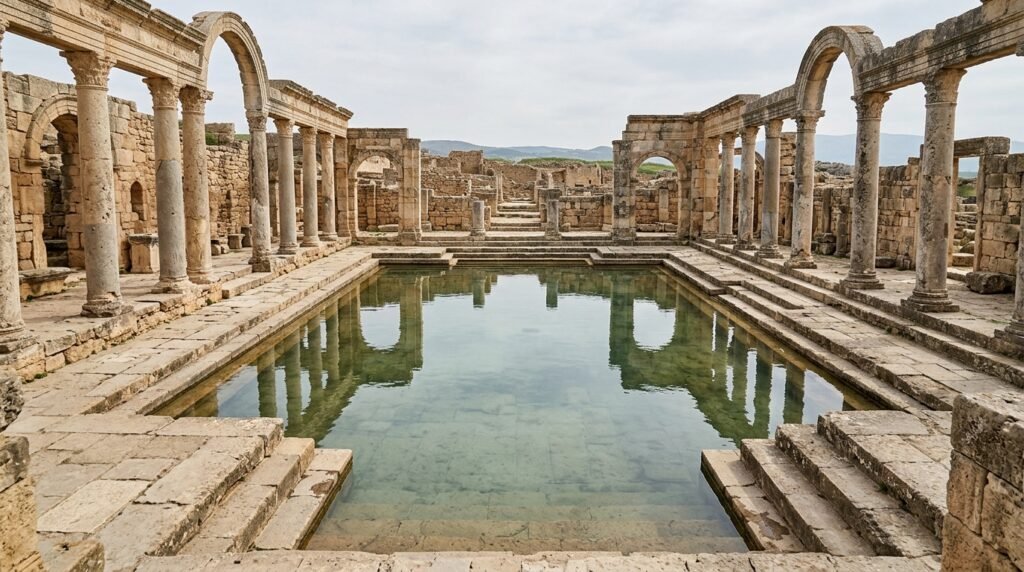
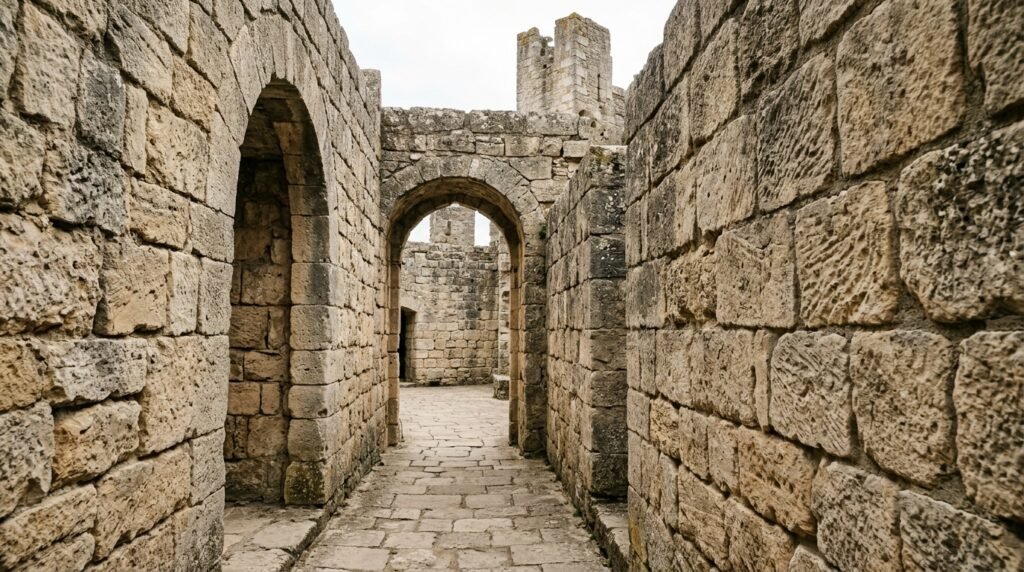
The walls reached several meters in thickness which construction workers built using hand-cut limestone blocks. The ancient Mediterranean cultures demonstrated superior engineering skills which were previously unknown according to the similarities between these ruins and the Great Walls of Troy.
Satellite Laser Mapping
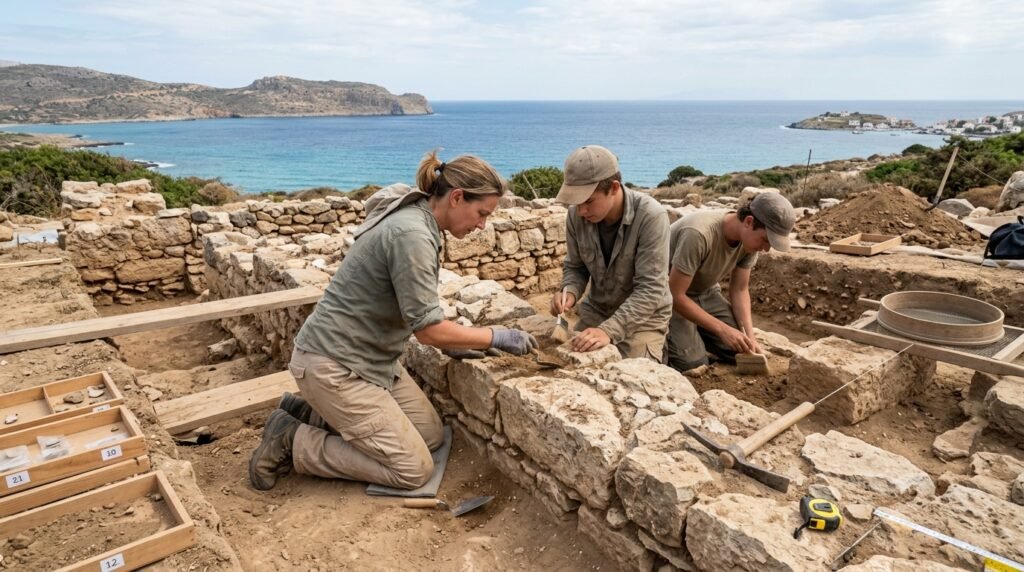
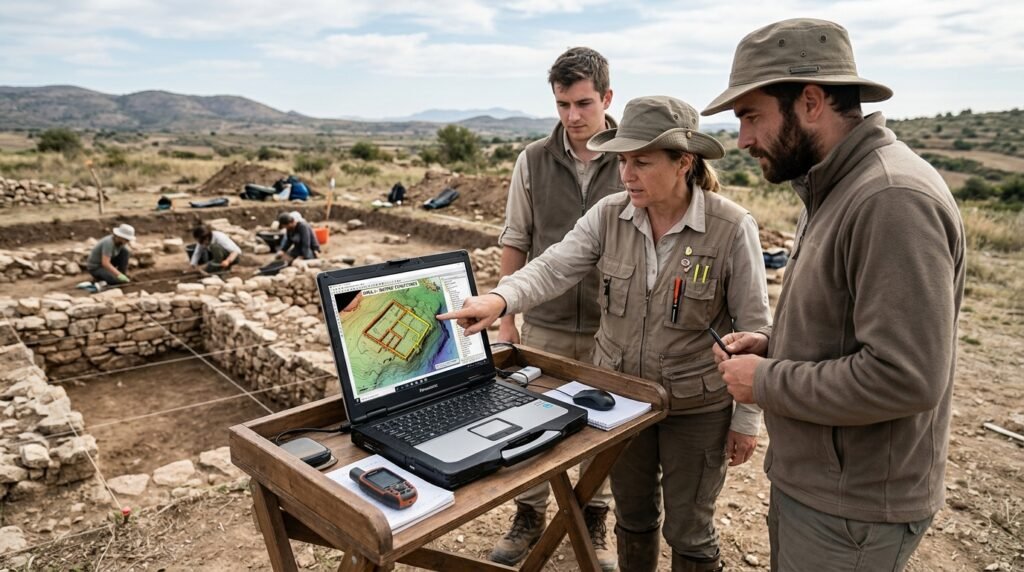
The archaeologists applied LiDAR technology which employs lasers to penetrate dense forest canopies and subterranean soil layers. The real-life X-ray technology revealed the fortress’s geometric shapes which were entirely concealed from view at ground level.
Evidence of Ancient Siege
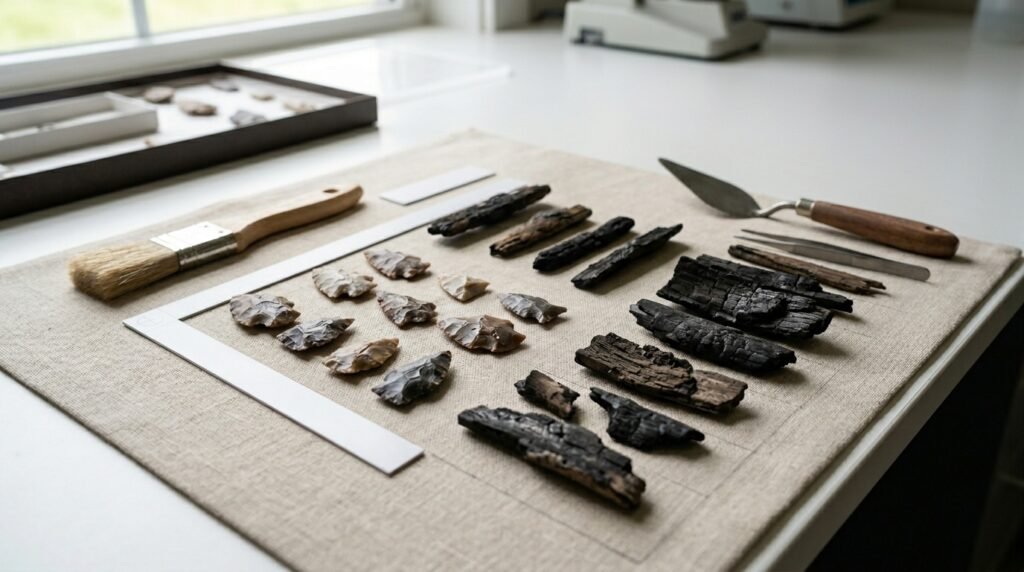
The excavation team discovered three types of evidence which included charred wood and broken arrowhead fragments located near the gates. The physical evidence indicates that the fortress underwent destruction because it sustained damage and battle-related events which led to its total devastation through natural environmental processes.
Sophisticated Drainage Systems
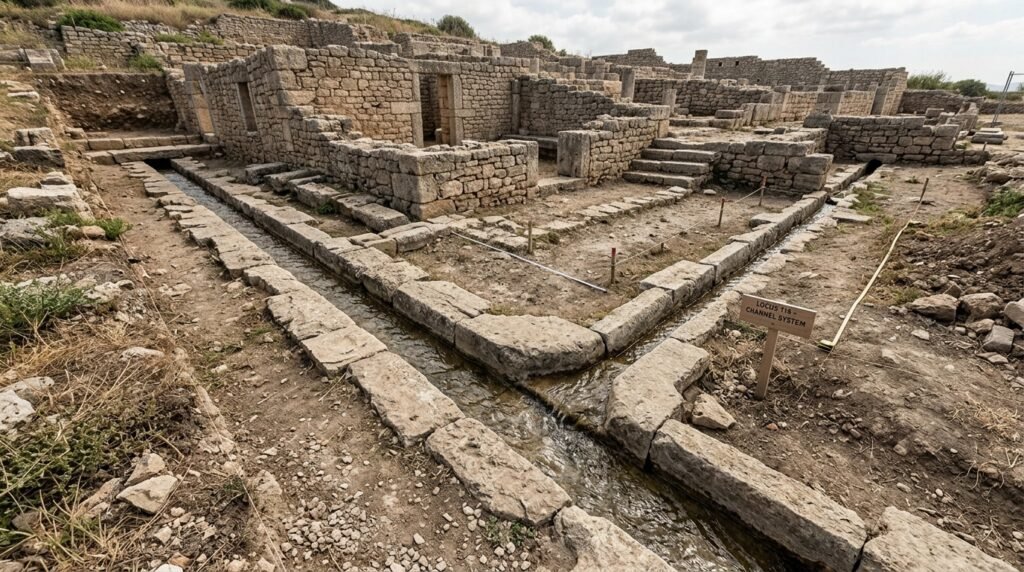
The fortress constructed 5,000 years ago included stone channels which directed rainwater away from residential areas. The structure achieved protection against heavy Mediterranean storms through mud-brick sections of the walls which had to stay intact.
Strategic Island Location
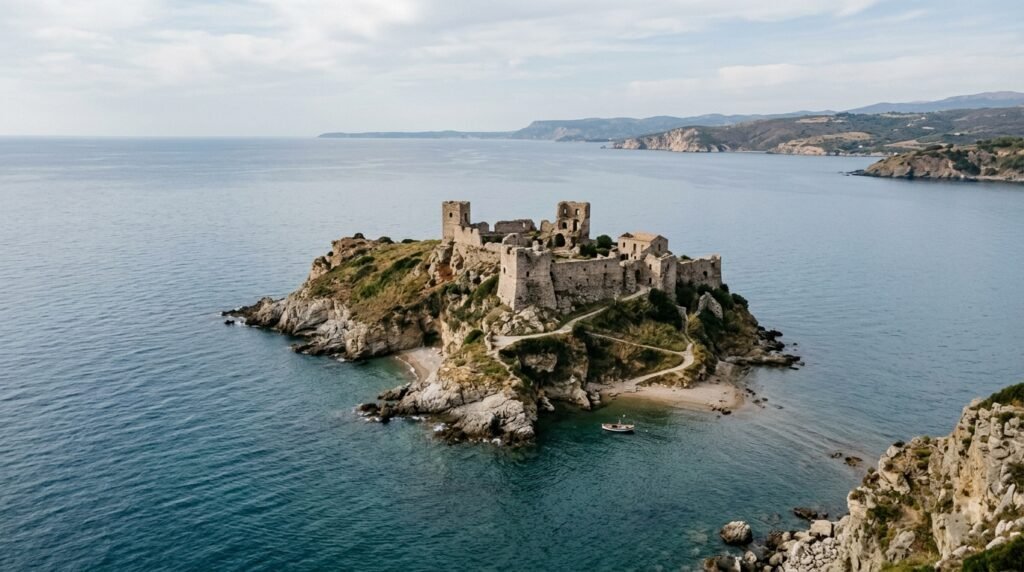
San Pantaleo island served as the optimal natural aircraft carrier which ancient sailors required for their needs. The fortress controlled trade routes between North Africa and Europe thus establishing itself as a crucial ancient power center.
The Role of Vegetation
The limestone terrain underwent transformation because local shrubs and wild olive trees developed on top of the surface. The roots functioned as natural nets which kept the loose stones together and prevented wall collapses during earthquakes.
Pottery and Trade Goods
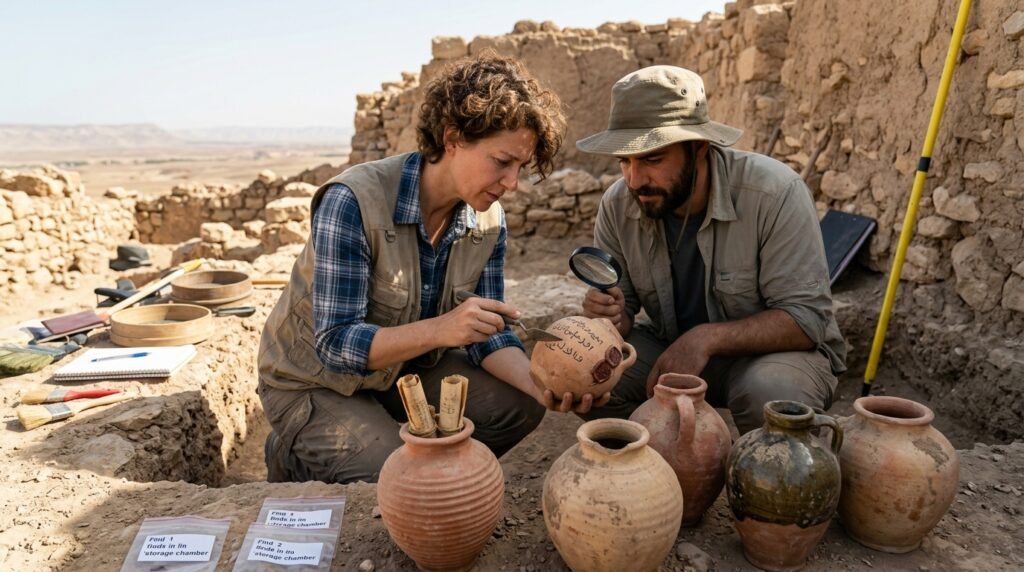
The archaeologists discovered jars which originated from distant countries inside the ruins. The artifacts functioned as ancient shipping receipts which demonstrated that the hidden fortress inhabitants belonged to an extensive global trading system.