 Isabella Miller
 Most passengers board a plane thinking about one person: themselves. Their seat, their overhead bin, their comfort, their connection. Flight attendants notice this. They notice everything that makes eye contact, who says thank you, who treats the cabin like a hotel room they have already checked out of mentally. The passengers who stand out are not the ones in first class. They are the ones who understand something simple: a little consideration at 35,000 feet goes an extraordinarily long way.
1. Greet the Crew When You Board Every Single Time
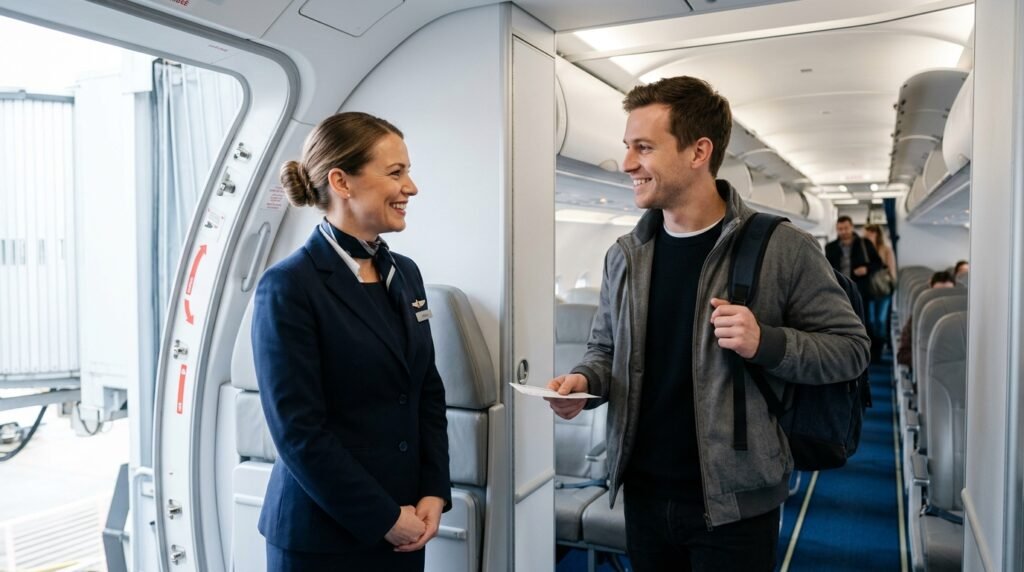
Flight attendants stand at the door of every flight and greet every passenger who walks through it. A significant portion of those passengers look straight through their eyes on phones, minds already somewhere else, treating the crew as part of the furniture rather than people doing a demanding job in a difficult environment. The passengers who make eye contact, offer a genuine hello, and mean it are remembered within seconds. It costs nothing. It changes the temperature of every interaction that follows for the entire flight. Board like a person, not a carry-on.
2. Learn the Difference Between the Call Button and an Emergency
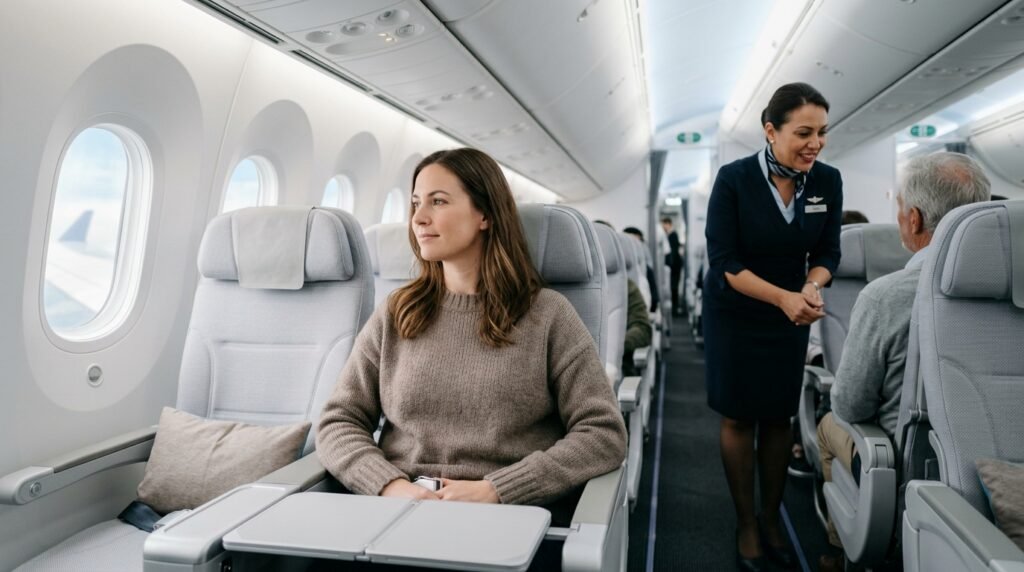
The call button exists for genuine needs, such as a medical concern, an empty water cup during a long flight, or a request that cannot wait for the next service pass. It does not exist to summon someone to adjust your air vent, retrieve an item from your bag in the overhead bin, or ask whether the wi-fi password is posted somewhere. Flight attendants manage hundreds of passengers across multiple cabins while conducting safety checks, completing service, and handling real emergencies. Every unnecessary call button press is a small withdrawal from a goodwill account you want to keep full.
3. Have Your Drink Order Ready Before the Cart Reaches You
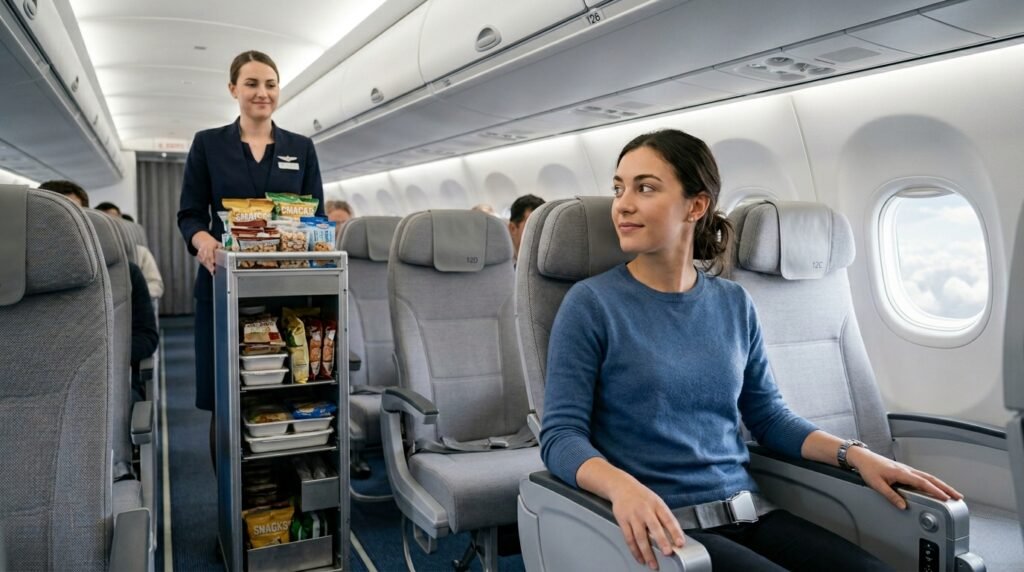
The beverage cart moves through a cabin on a tight timeline, and flight attendants can see clearly, from several rows away, exactly which passengers are going to hold up the entire process by treating the arrival of the cart as their first opportunity to consider what they might want to drink. Look at the menu before takeoff. Decide early. When the cart reaches your row, have an answer. Bonus points for knowing whether you want ice. This single act of minor preparedness signals that you are someone who respects other people’s time, including the people working to serve you.
4. Headphones Out, Eyes Up When Crew Addresses You
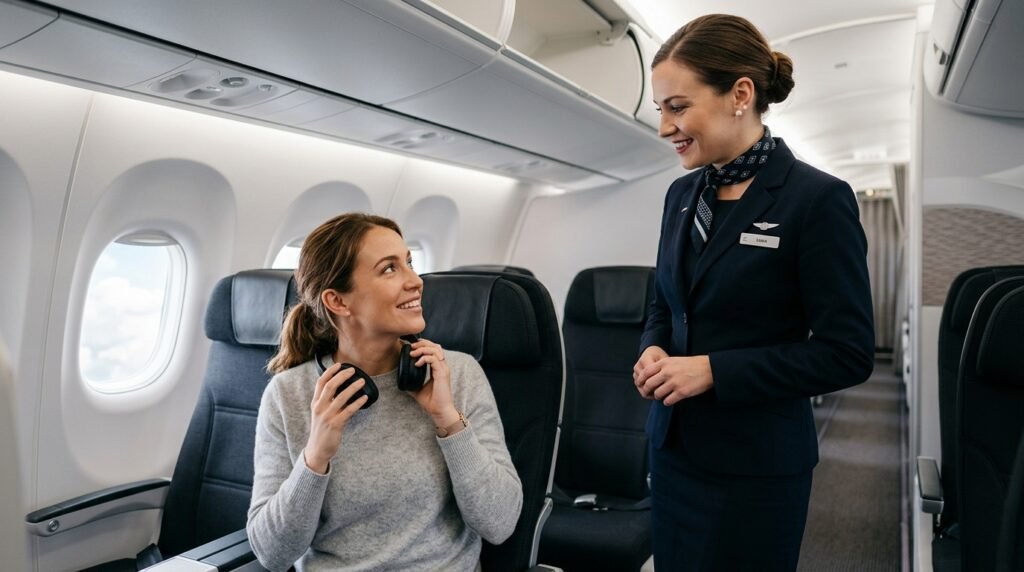
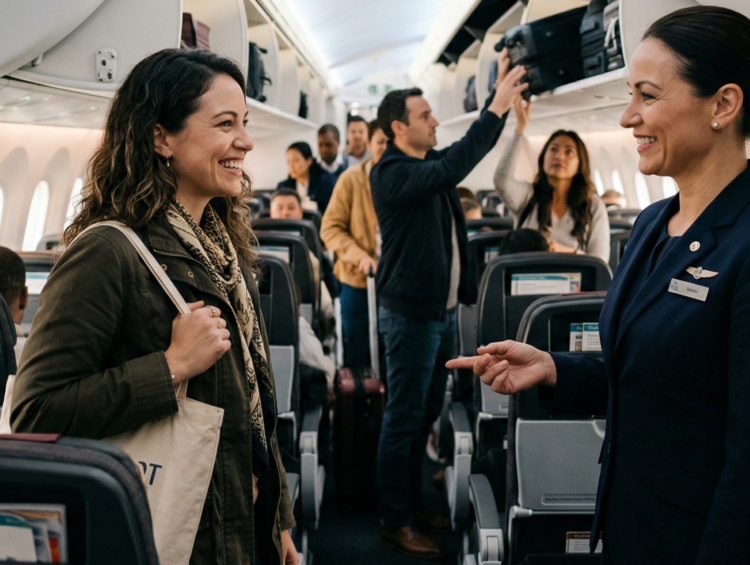
There is a specific and widely shared frustration among flight attendants involving passengers who, when spoken to directly, respond without removing their headphones, cupping one ear slightly, or simply raising their voice to communicate through whatever they are watching. It communicates, with remarkable efficiency, that the conversation is an interruption rather than an interaction. Remove the headphones. Make eye contact. Respond like a person having a conversation with another person. The entire exchange will take twelve seconds, and the impression it leaves will last the duration of the flight.
5. Clean Up After Yourself Before Landing
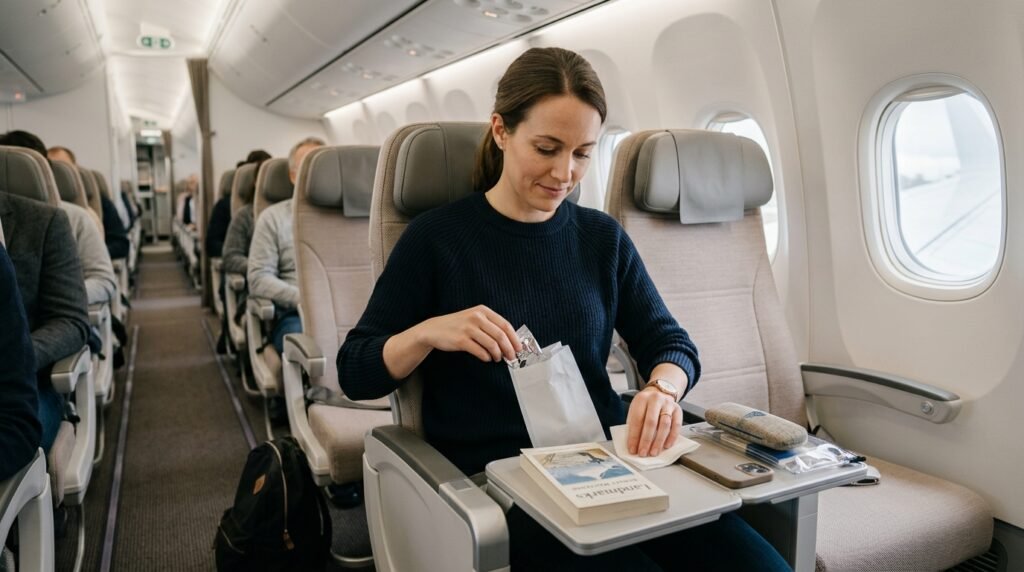
The cleanup that happens between flights is real work performed by real people on a timeline so tight it would make most office workers genuinely anxious. Wrappers stuffed into seat pockets, cups balanced on armrests, blankets kicked to the floor, tray tables left with the debris of a six-hour flight, all of it becomes someone else’s problem the moment you stand up and reach for your bag. Collect your rubbish. Stack your cups. Fold or at least stack your blanket. Hand it to the crew during the final pass. It takes ninety seconds, and it matters more than you think.
6. Treat the Galley Like Someone’s Workplace Because It Is
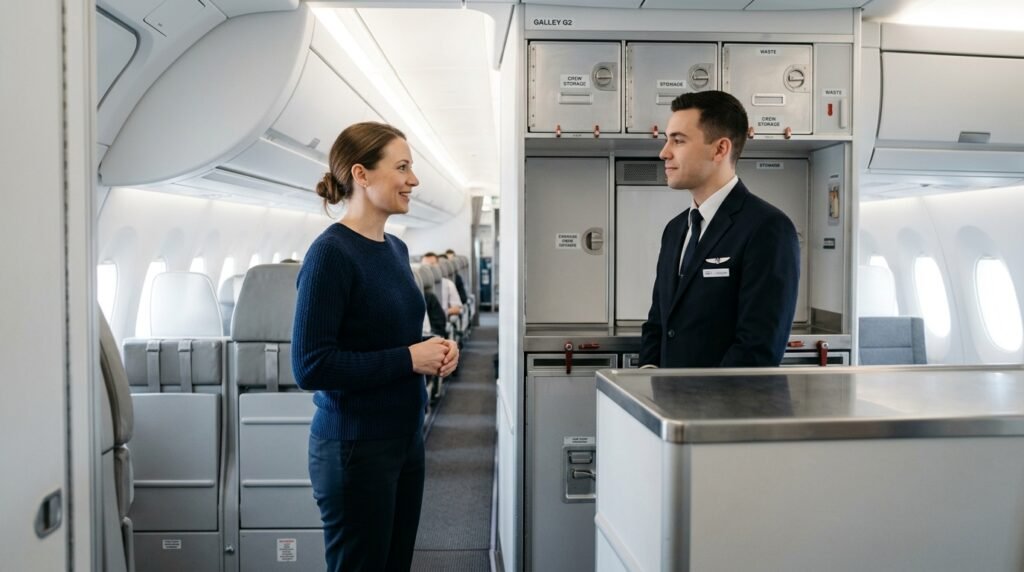
Passengers who wander to the galley during flights treat it with a range of attitudes, from politely curious to entirely uninhibited, opening curtains without asking, leaning on equipment, helping themselves to snacks laid out for crew use, and conducting loud personal phone calls in the one space the crew uses to decompress between service rounds. The galley is not a social lounge. It is a working kitchen and a rare pocket of recovery space for people managing an entire aircraft of needs. Knock. Ask. Do not linger. Leave it better than you found it.
7. Say Please and Thank You Like You Mean It
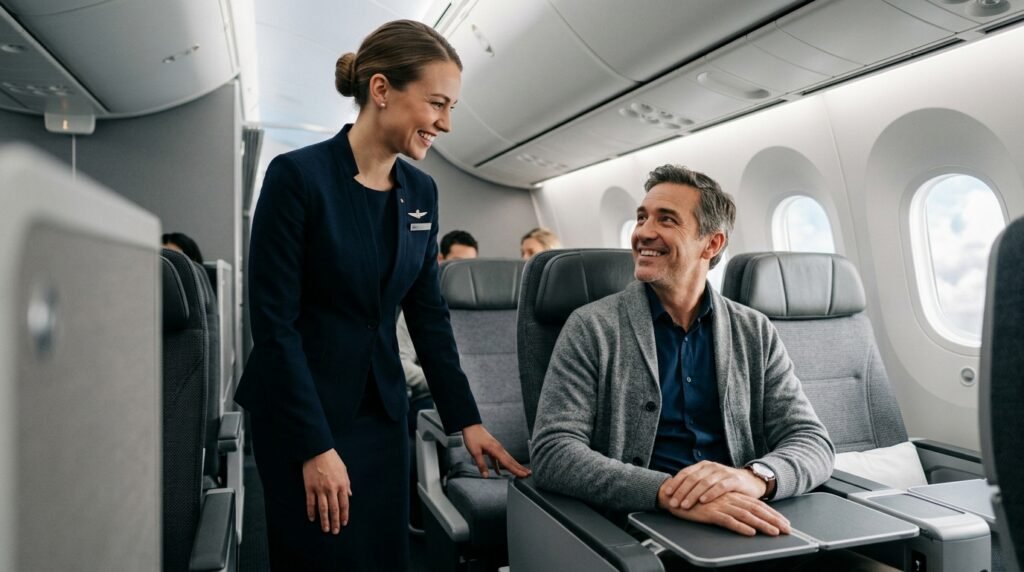
This sounds so basic that it barely warrants inclusion, and yet flight attendants will tell you, with the particular weariness of people who have been doing this long enough to have stopped being surprised, that please and thank you remain genuinely uncommon in the cabin. Not rare exactly. But uncommon enough to be noticed, remembered, and appreciated in a way that meaningfully shifts the dynamic of every subsequent interaction. Genuine gratitude, not performed, not perfunctory, but actual acknowledgment that someone just brought you a ginger ale at 35,000 feet is quietly one of the most powerful tools available to any passenger.
8. Follow Instructions the First Time
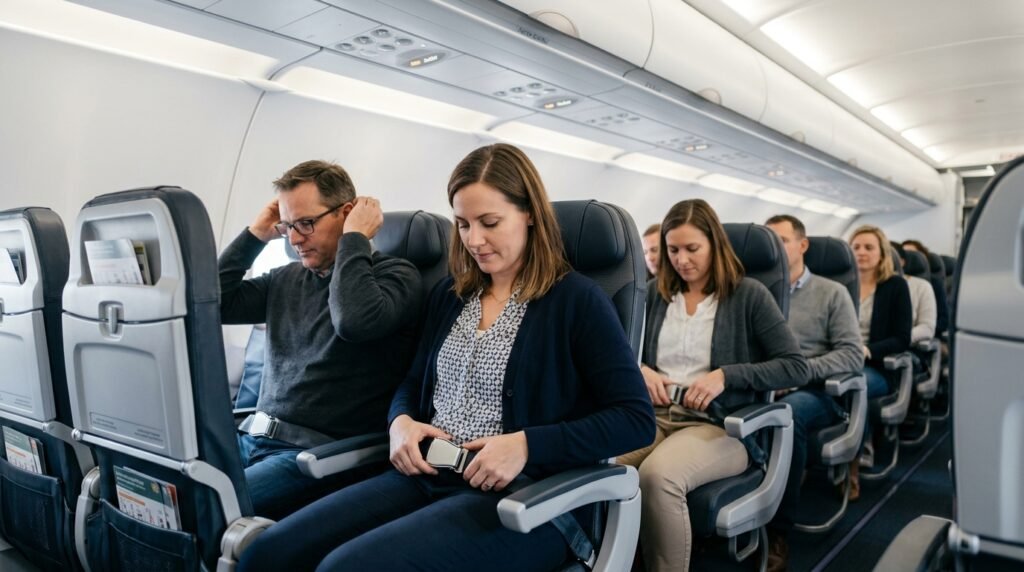
Safety announcements, seatbelt signs, requests to stow tray tables, instructions to power down devices during takeoff, flight attendants give these instructions once and then spend the remainder of each relevant window watching a percentage of the cabin decide that the instructions apply to everyone except them. Passengers who comply immediately, completely, and without the theatrical sigh that communicates reluctant capitulation are the passengers who make a crew’s job measurably easier. Instructions on an aircraft are not suggestions dressed up in official language. Responding to them like the reasonable adult you presumably are is among the most considerate things you can do in a cabin.
9. Be Specific and Reasonable When You Ask for Something
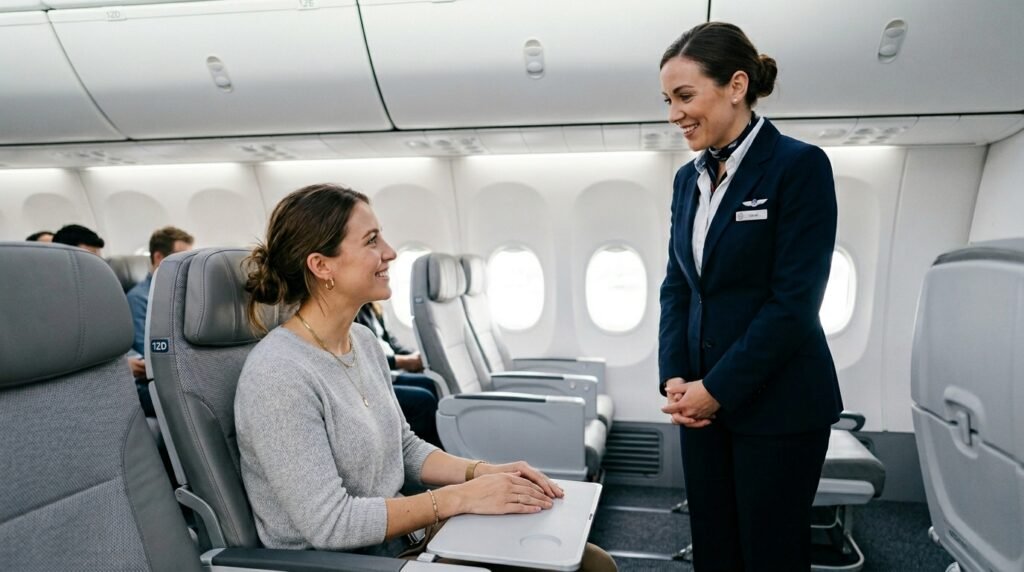
“Can I get something to drink?” is a question that requires a follow-up question. “Can I get a sparkling water with no ice, please?” is a request that gets answered immediately and correctly. Specificity is a form of consideration that reduces the back-and-forth, eliminates the possibility of a wrong guess, and signals that you have thought briefly about what you actually want before asking someone to go get it for you. The same principle applies to meal preferences, pillow requests, and anything else that requires a crew member to retrieve something from a limited inventory. Know what you want. Ask for exactly that.
10. Acknowledge That They Are People, Not Fixtures
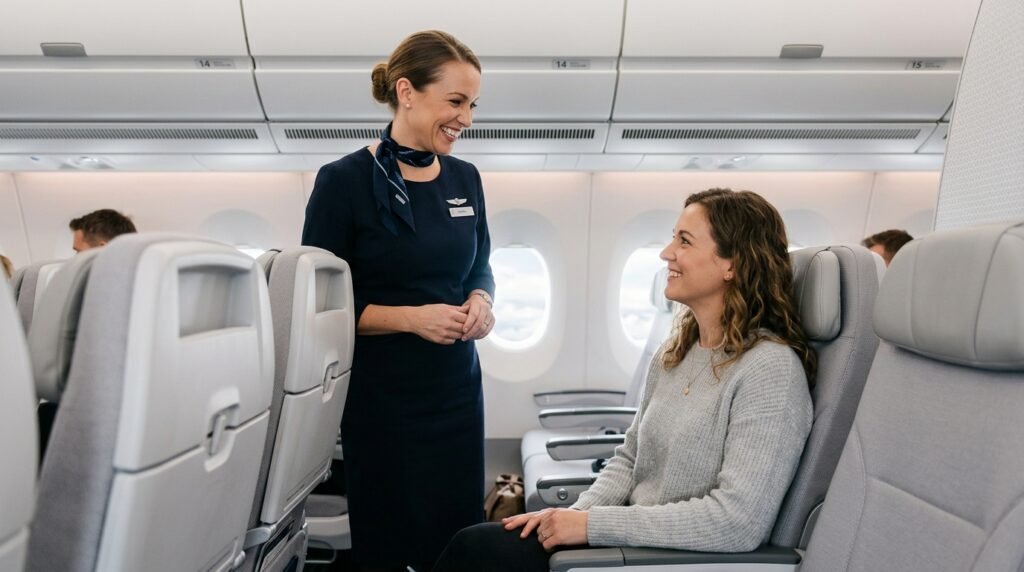
The single quality that unites every passenger a flight attendant will remember fondly across every airline, every route, every class of service is the quality of being genuinely seen. Not flattered, not tipped, not thanked with the hollow ritual of a loyalty program member who has memorized the correct gestures. Actually seen. A question about how their day is going and patience to hear the answer. Noticing when they look tired and not adding to it unnecessarily. Remembering their name if they gave it and using it once more before deplaning. The altitude changes everything on a plane except the fundamental human arithmetic: people respond to being treated like people. Every single time.