 Isabella Miller
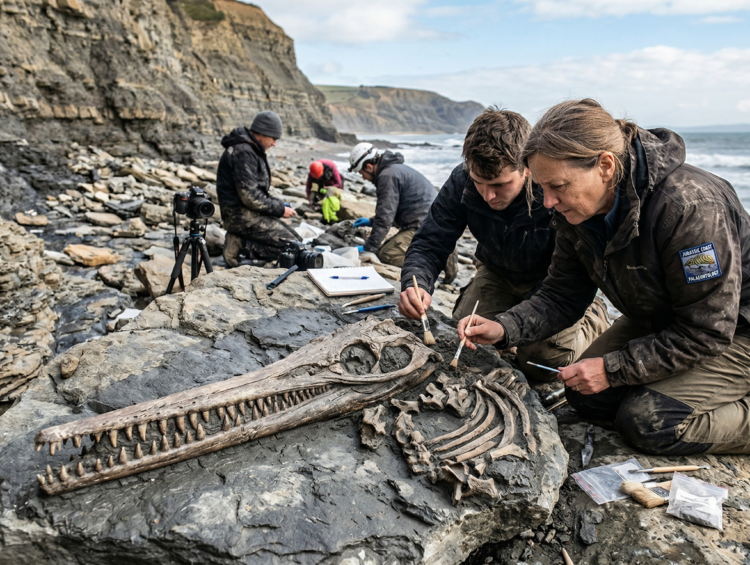
 The morning news yet again discloses major paleontological progress through the discovery of Xiphodracon goldencapensis which scientists call the Sword Dragon of Dorset. This fossil which dates back 190 million years provides scientists with a rare opportunity to study a Jurassic period which has been missing from scientific records and demonstrates how ancient marine reptiles developed through time.
The Twenty-Five Year Hidden Truth
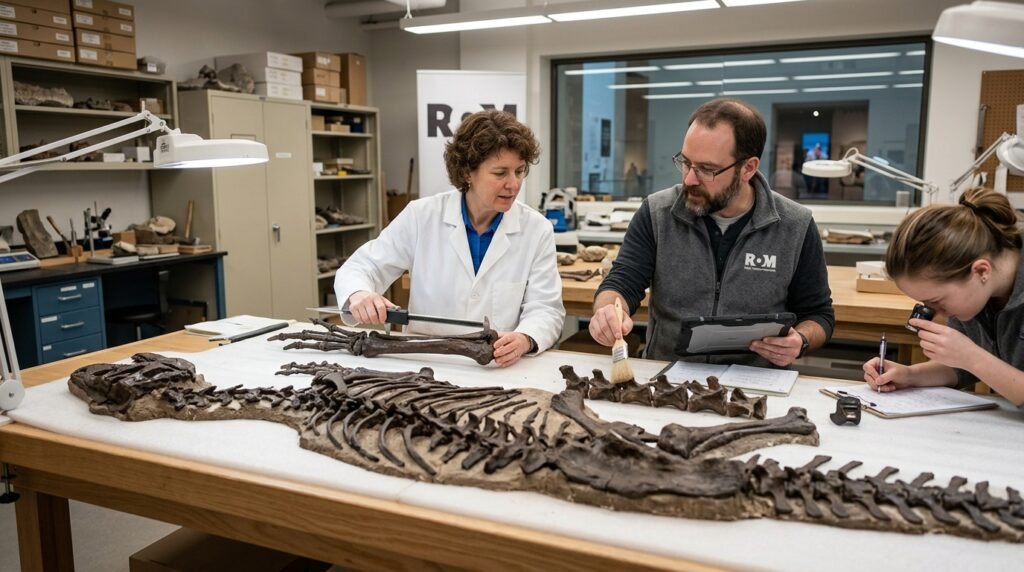
Chris Moore discovered the fossil in 2001 but its contents have only now become public news. The museum held the specimen for 20 years until scientists used recent scientific methods to verify its status as an undiscovered species of organism.
The “Sword-Like” Snout
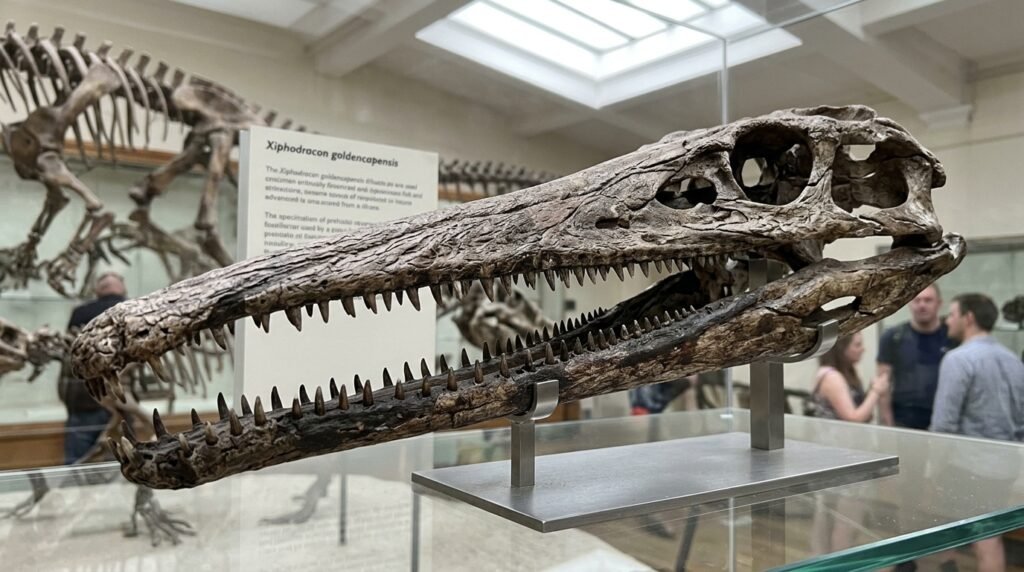
The name of this animal comes from its long snout which has a narrow shape that looks like a sword blade. Scientists believe this feature served as a specialized weapon that people used to capture fast-moving deep ocean creatures which included ancient squid and fish.
Filling a Massive Time Gap
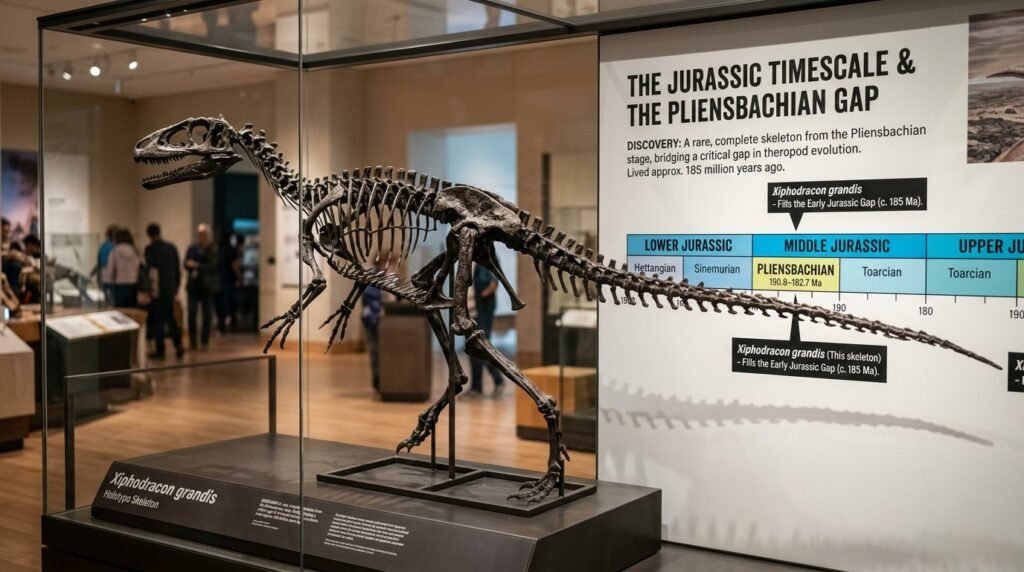
This creature lived during the Pliensbachian period, a “blind spot” in the fossil record. Before this discovery, scientists had very few complete skeletons from this time which made it difficult to trace the evolution from one sea monster species to another.
The “Dolphin” of the Jurassic
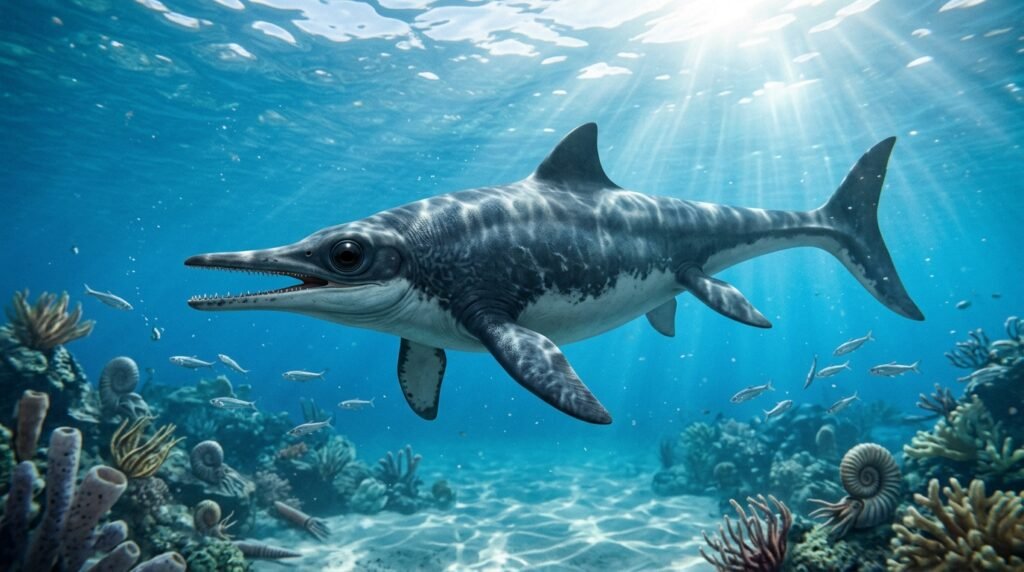
The Sword Dragon reached a length of 10 feet which made it similar in size to a contemporary dolphin. Its design featured a streamlined body along with powerful flippers that enabled it to swim rapidly through the tropical waters which once surrounded the British Isles.
The Giant Eyes Of Nocturnal Animals
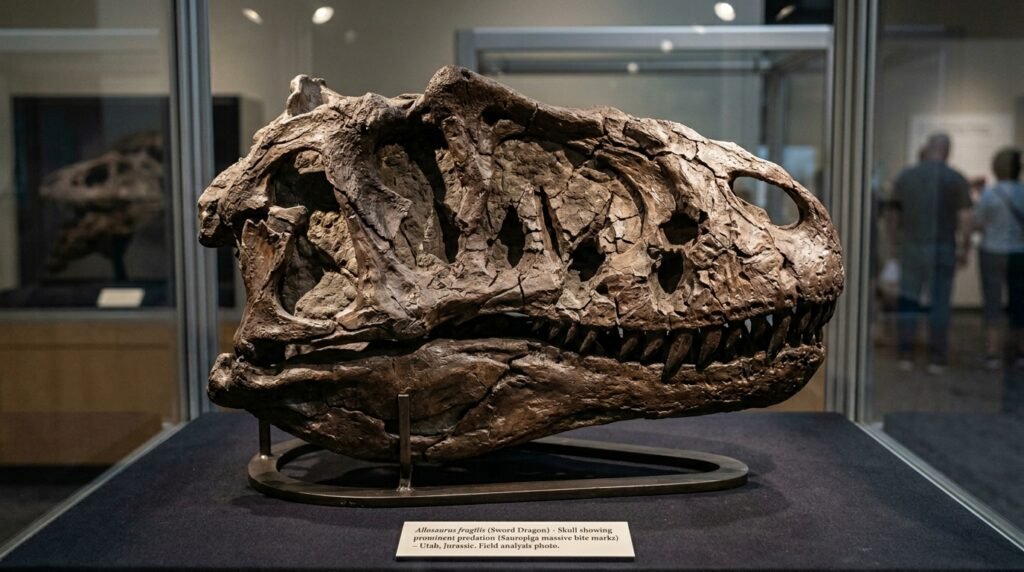
The fossil displays an exceptionally large eye socket which represents one of the largest eye sockets that match its overall body dimension. The Sword Dragon possessed vision capabilities which enabled it to hunt in deep ocean waters or hunt at night when most of the surrounding area remained dark.
The Evidence Shows a Violent Death
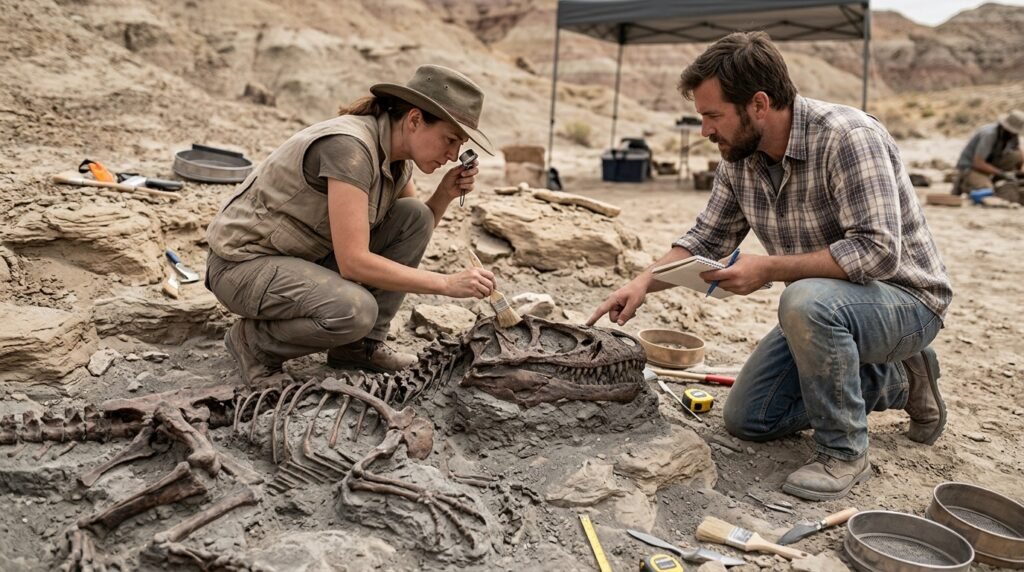
The skeleton consists of bones which scientists use to analyze this particular crime scene and researchers found bite marks on the skull from a much larger predator—likely a bigger cousin, suggesting this “dragon” was once someone else’s dinner.
A Three-Dimensional Treasure
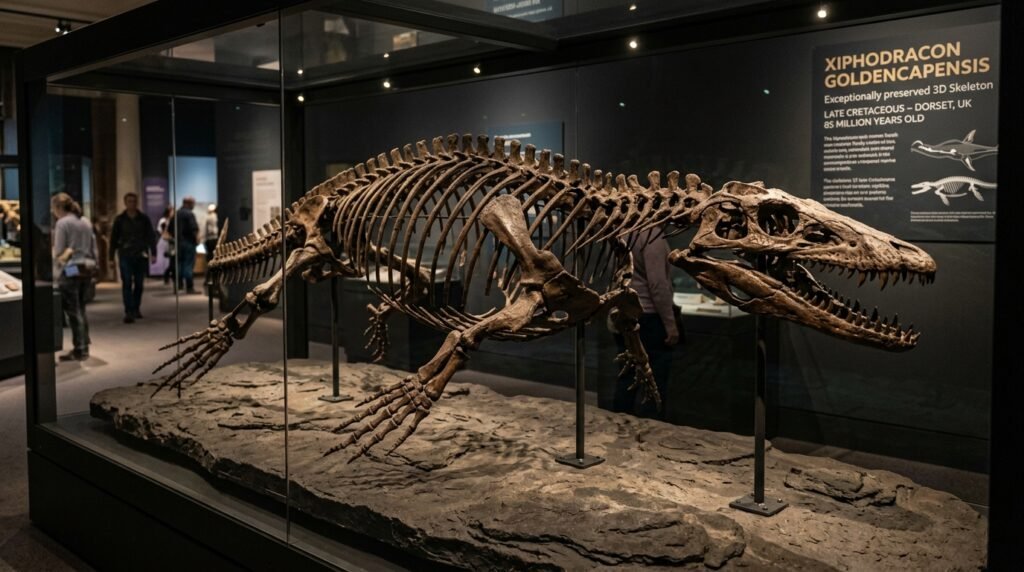
The pressure from earth material which has existed for millions of years causes most fossils to become flattened into two-dimensional forms. Scientists can examine the complete preservation of this Sea Monster because it shows the original shape of its skull and teeth.
The First Discovery in a Century
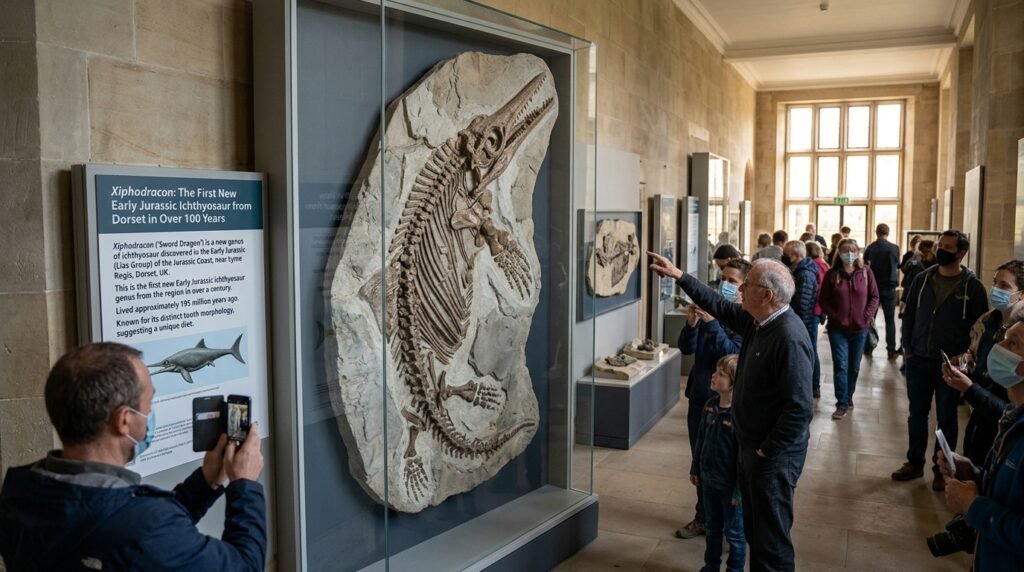
The Jurassic Coast contains many preserved fossils yet this area has not produced any new Early Jurassic ichthyosaur species which scientists branded as a new genus since almost 100 years ago.
Rewriting the Family Tree
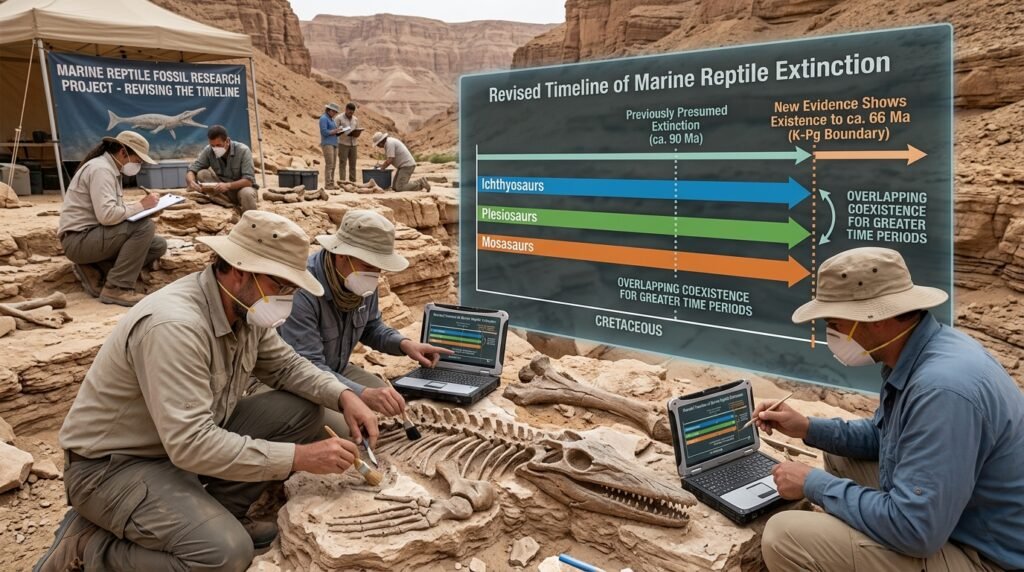
The fossil research led experts to discover that different marine reptile groups continued to exist for greater time periods than scientists had presumed in the past. The discovery moves the entire timeline of animal extinction events which scientists used to determine when different species disappeared and when new species began to emerge.
The Final Meal Traces
Scientists believe they found dark masses which they think represent the animal’s stomach contents because the preservation of the specimen remains intact. The evidence of the animal’s diet confirms what it consumed 190 million years ago during its existence.
The “Sea Dragon” Legacy
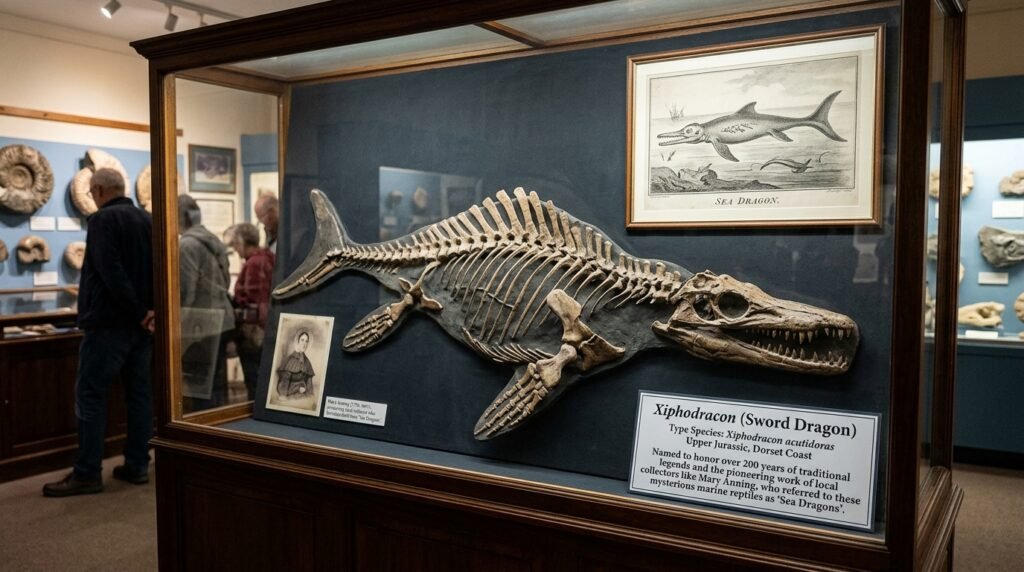
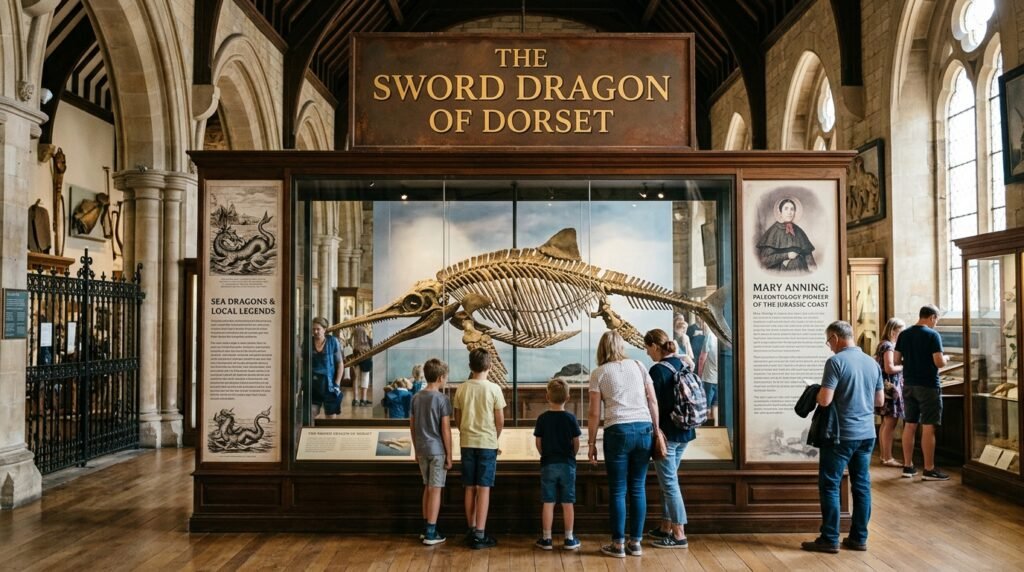
Mary Anning and other local collectors used the term Sea Dragons to describe these creatures for over 200 years. Scientists have named the species Xiphodracon Sword Dragon to honor the traditional legends which locals tell about the Dorset coast.
A Global Collaboration
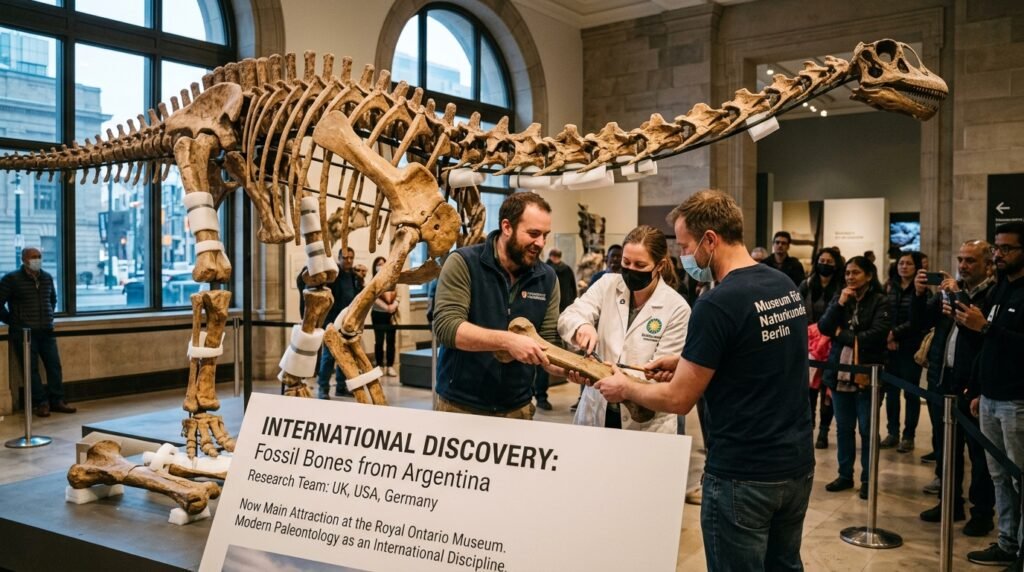
The research involved a team from the UK, USA, and Germany. The original fossil bones now will become the main attraction at the Royal Ontario Museum which demonstrates how modern paleontology operates as an international scientific discipline.