
 Sophia Davis
 Your mind handles information by rejecting things which you already know to keep you aware of new things happening around you. The process called sensory adaptation enables your nervous system to stop perceiving unchanging background odors which include your home scent. Your brain can identify dangerous situations because it quickly removes all familiar smells from its detection system.
Sensory Adaptation

This biological process stops your nose from transmitting smell signals to your brain when it detects an unchanging scent. Your home scent leads to constant receptor activation until your body stops responding to it.
The process enables your brain to dedicate its resources toward detecting essential environmental changes.
Receptor Fatigue

Your home releases its odor molecules which continuously attach to your nasal receptors. The receptors take a few seconds to reach a state where they become unable to detect that particular scent. The system requires time away from the external input before it can begin sending out its alerts.
Energy Conservation

The process of sensory data evaluation requires extensive mental resources which include both energy consumption and cognitive concentration. The brain operates at maximum efficiency when it disregards any “predictable” information which has remained unchanged during the past few seconds. The method protects your mental resources for tasks which demand direct problem resolution.
Signal-to-Noise Ratio

Your brain perceives the scent of your home as background “noise” which provides no fresh information. The process of filtering enables the “signal” to enhance detection of new odors which include a guest’s perfume or a gas leak. The system acts as an internal volume control which regulates our sensory perception activities.
Rapid Neural Reset

The human body contains its fastest adapting cells which work as the smell neurons. The humans perform the transition between “alert” and “ignored” status within six seconds of receiving continuous exposure. The system provides instant sensory palette cleaning through its quick resetting mechanism.
The Baseline Effect

Your home’s smell establishes your personal “zero point” which defines your standard for air quality. Your olfactory bulb perceives anything which matches this baseline as completely invisible. Your body detects a scent only when it differs greatly from the established scent base.
Olfactory Bulb Filtering
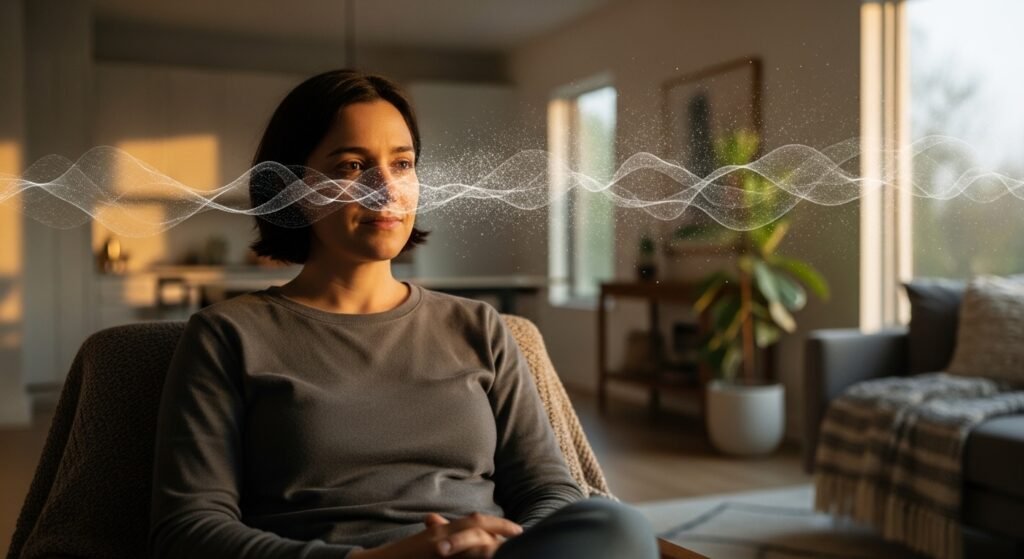
The olfactory bulb sorts smells before they can reach your conscious awareness. The brain section functions as a guardian which determines which scents need your focused observation. The system prevents mental clutter by blocking all standard home odors from passing through.
Memory Association

The human brain connects familiar scents with safe spaces which results in rapid scent “muting”. Your brain becomes more likely to disregard everything around you in secure situations. The reason you notice your home’s scent after being away for an extended period results from this process.
Vapor Pressure Sensitivity

Most home odors originate from low-level “off-gassing” which occurs during furniture usage, pet ownership and cooking activities. The constant low-intensity odors which become present in the environment lead to faster adaptation than sudden sharp smells. Your brain handles sensory inputs which come at a gradual constant pace by automatically neglecting them.
Environmental Consistency

Your brain depends on the predictable nature of your home environment because it remains mostly unchanged throughout time. The brain “archives” a smell immediately after entering because of air quality which remains constant. The system creates a mental area which offers both neutral and comfortable sensations.