
 Sophia Davis
 Your airplane will begin its journey to increased excitement after you fasten your seatbelt for the upcoming flight. Your airplane contains various hidden engineering features that operate under stealth to deliver comfort to passengers and protect their safety. Passengers tend to overlook the concealed attractions that exist throughout the airport until they discover the precise locations to investigate.
The Magic Armrest Button
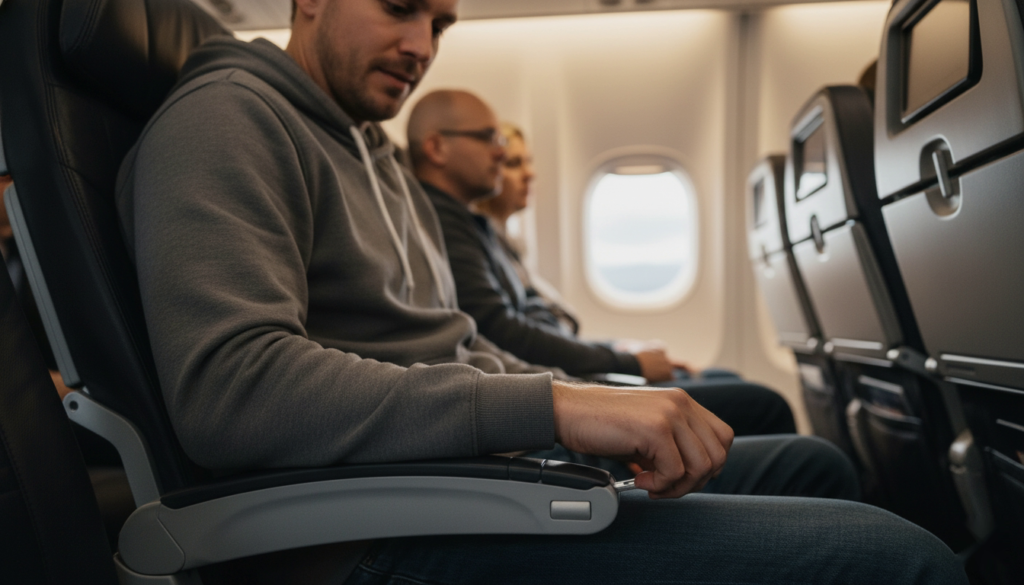
A passenger who occupies an aisle seat should search for the button or lever, which remains concealed underneath the armrest at its hinge location. The armrest delivers complete upward movement after you press the button, which creates additional space for your body to move while enabling easier access to your seat.
Black Triangles in the Cabin
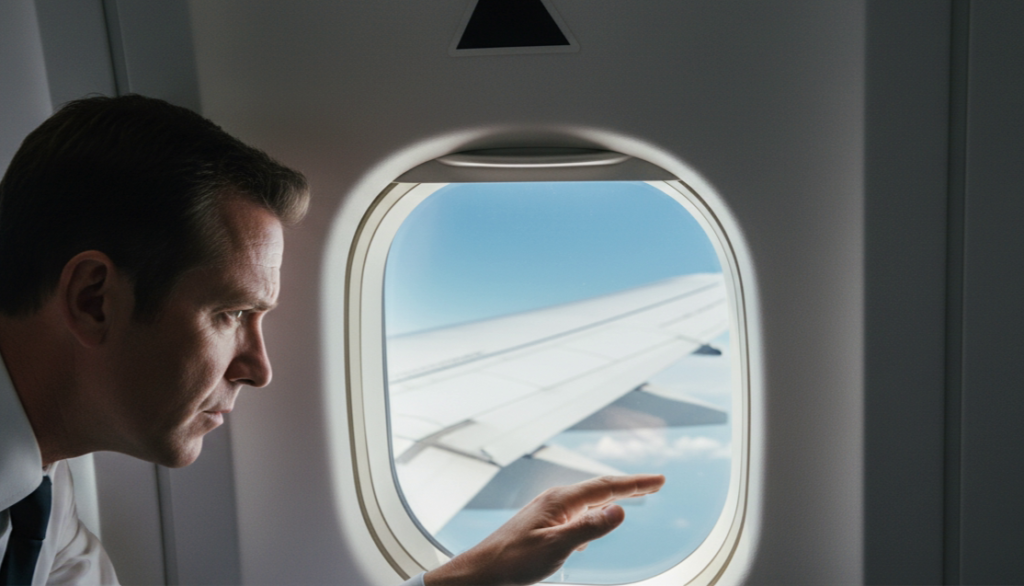
The ceiling of the aircraft contains black triangular shapes that extend above designated window areas. The markers indicate the specific location of the “William Shatner Seat,” which serves as an optimal observation point for flight personnel who need to perform visual inspections of airplane wings and flaps during suspected mechanical problems because it enables them to conduct inspections by visual inspection, which reduces time requirements for their work.
The Secret Latch Behind the “No Smoking” Sign
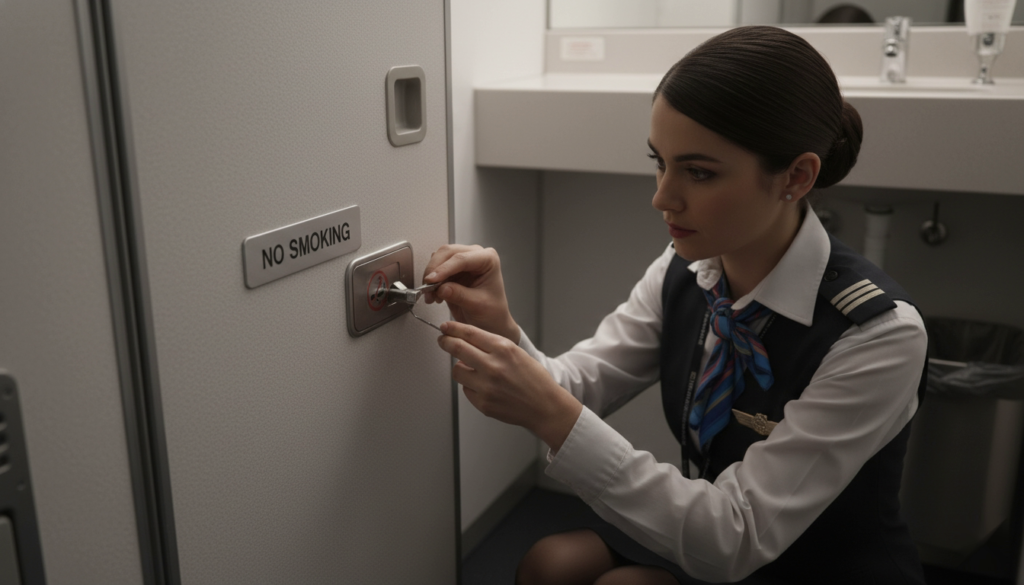
The restrooms contain ashtrays despite smoking being prohibited because there exists a more vital concealed item that resides nearby. The majority of lavatory doors contain a concealed latch, which is situated beneath the metal sign that displays “lavatory” or “no smoking.” The device functions to enable crew members to unlock doors from external points during situations when emergencies arise.
Yellow Wing Hooks
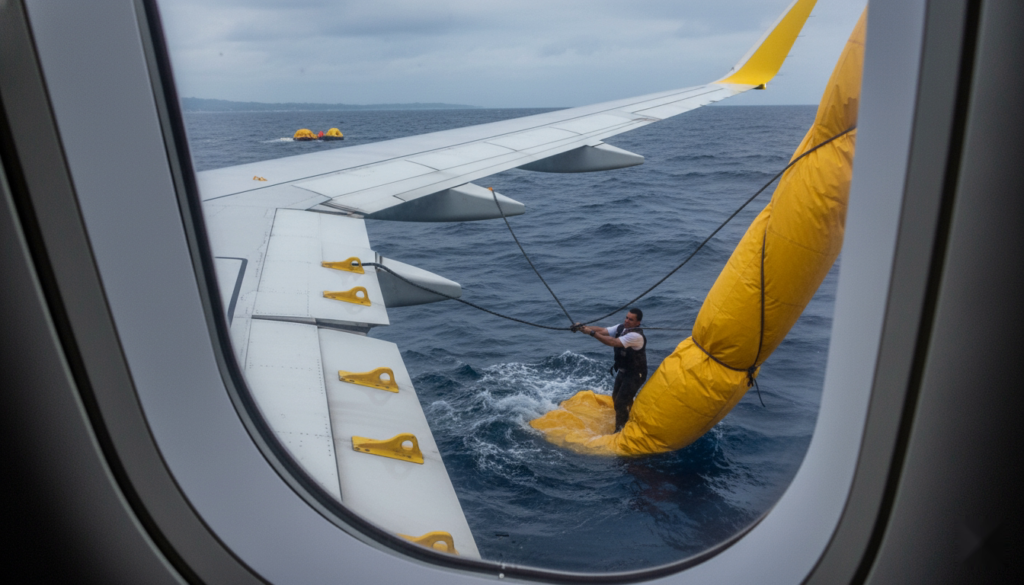
The window view reveals yellow hooks, which function as a lifesaving device. The emergency water landing procedure uses these hooks to create a handrail system that passengers can use to maintain their balance as they walk toward the inflatable slides.
The “Z-Hole” in Windows
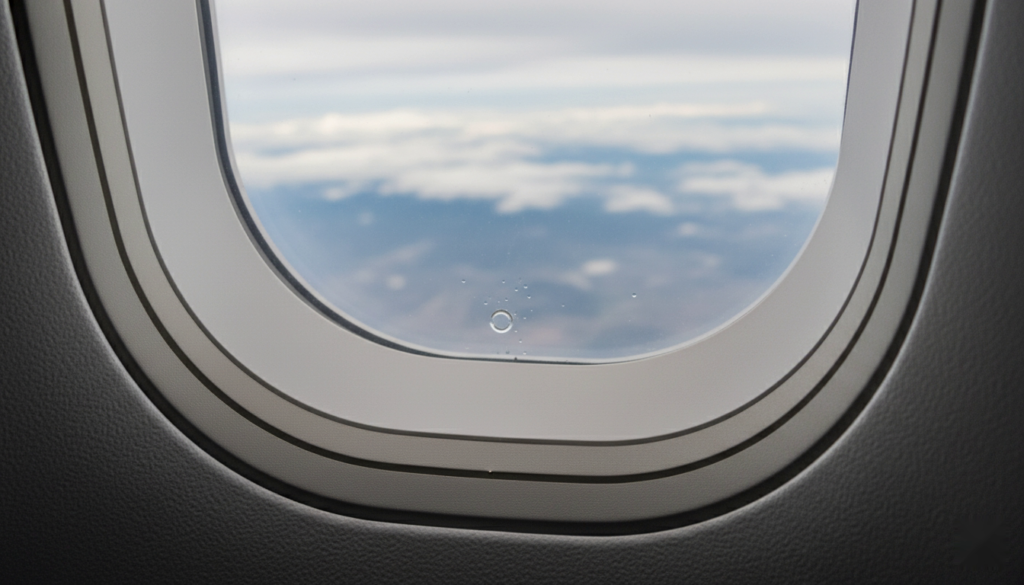
A small pinhole exists at the base of your window, which requires you to observe the area carefully. The “bleed hole” serves to control the extreme pressure difference between the cabin environment and external atmospheric conditions because it prevents the outer window pane from breaking while keeping the interior window surface free from moisture.
Built-In Handrails
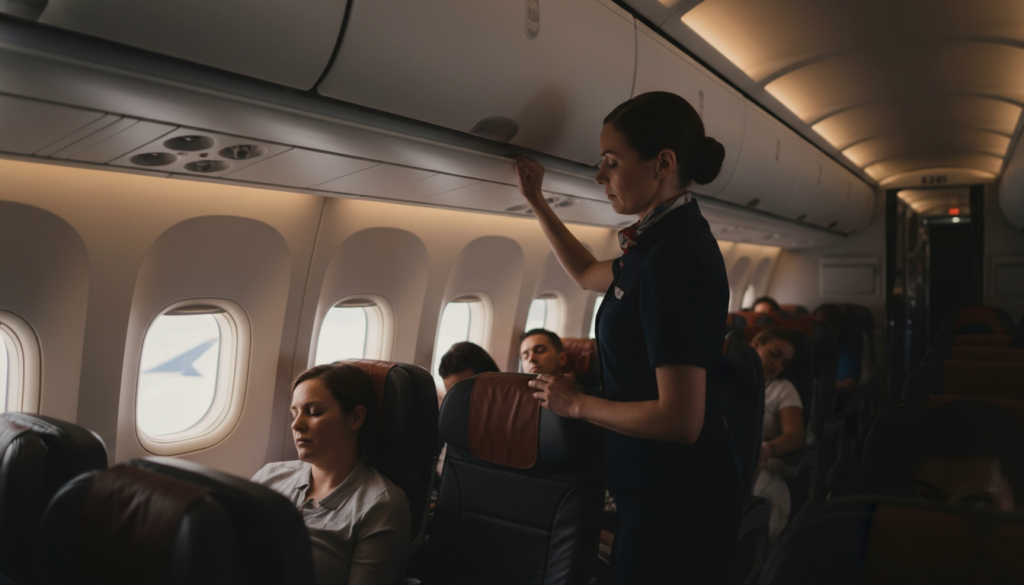
The overhead bins feature a grooved edge, which you can see. The design element serves a functional purpose. The construction of the handrail permits flight attendants to navigate through the cabin space without using headrests while passengers sleep during turbulence situations.
Hidden Bedroom in the Ceiling
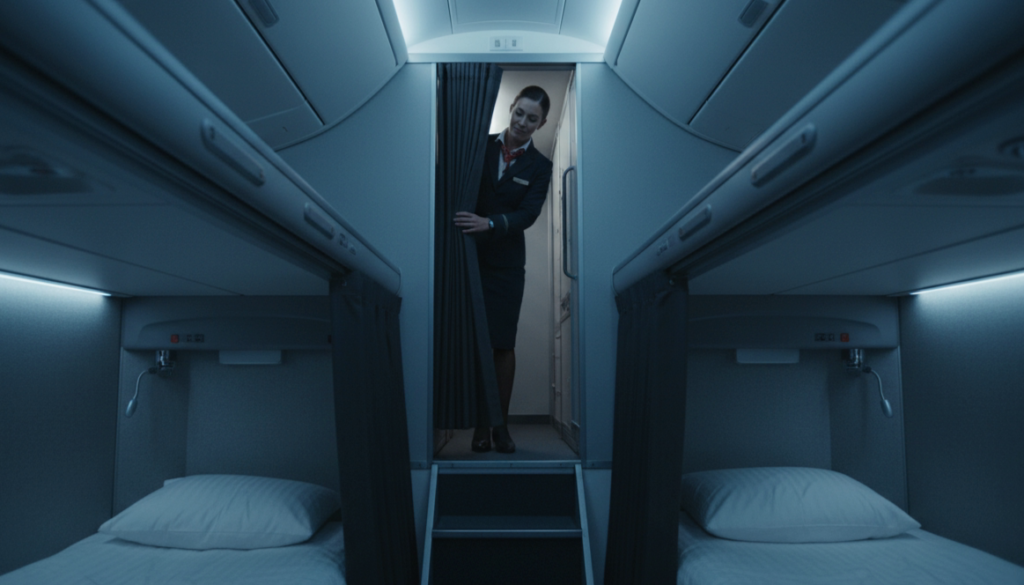
The Boeing 787 long-haul aircraft features a concealed staircase that provides access to the “Crew Rest Compartment” area, and the area located above the main cabin contains a windowless loft that features beds and curtains for pilots and attendants to use during their 12-hour flight breaks.
Emergency Oxygen “Chemical Candles”
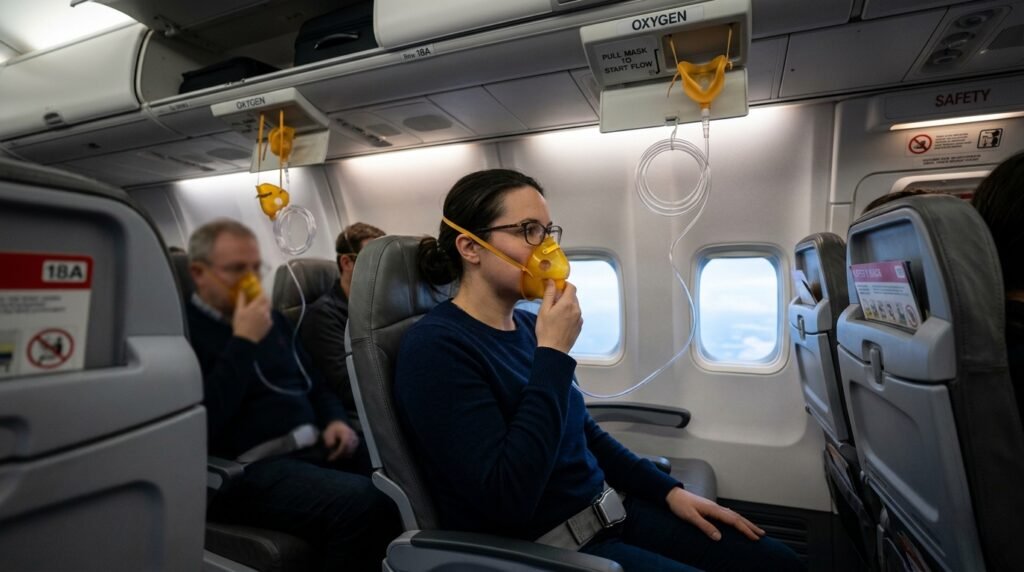
The masks that drop down don’t actually lead to oxygen tanks. The system uses a chemical reaction within the small canister to produce breathable oxygen for human consumption. The chemical process operates to keep the airplane airborne while delivering fresh air to the cabin for a duration of 15 minutes.
The “Gas Mask” at the Door
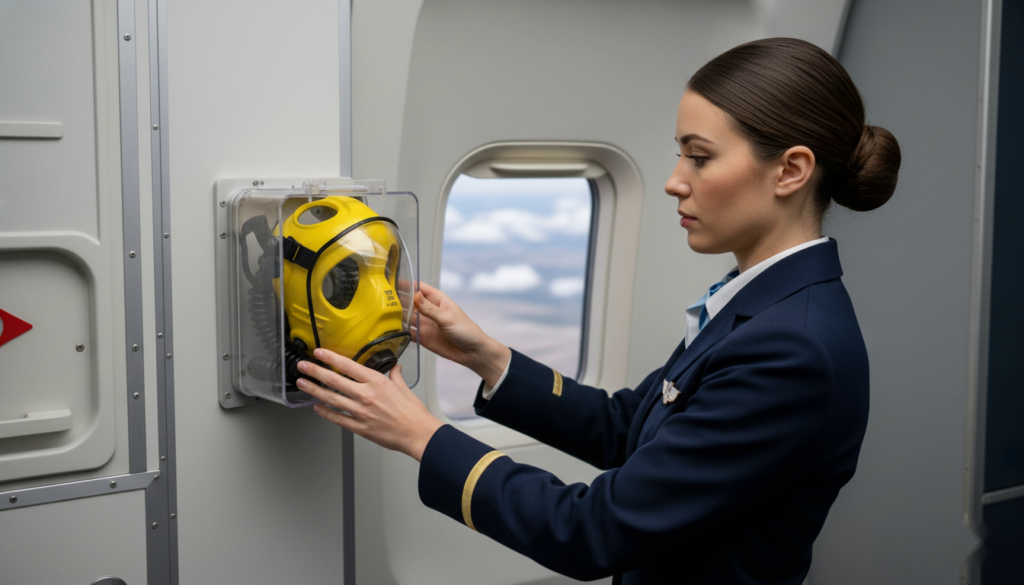
The exit doors lead you to a small clear box, which serves as the entry point to the area. The Protective Breathing Equipment (PBE) device functions as a protective equipment unit for users. The device functions as a modern space helmet, which enables crew members to experience smoke-free cabin conditions while maintaining their ability to see and breathe.
Winglets for Better Fuel
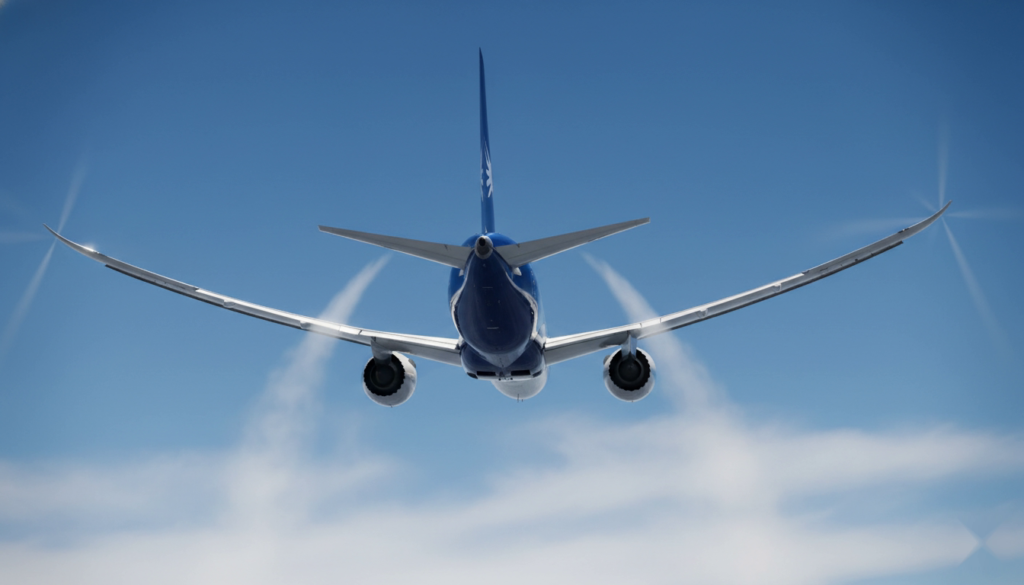
The wingtips feature vertical “fins,” which aviation experts refer to as winglets. The design element functions as an aesthetic feature while it decreases drag because it facilitates airflow control that originates from the aircraft wings, resulting in improved fuel economy and stable flight operation.
Individual Air Nozzles
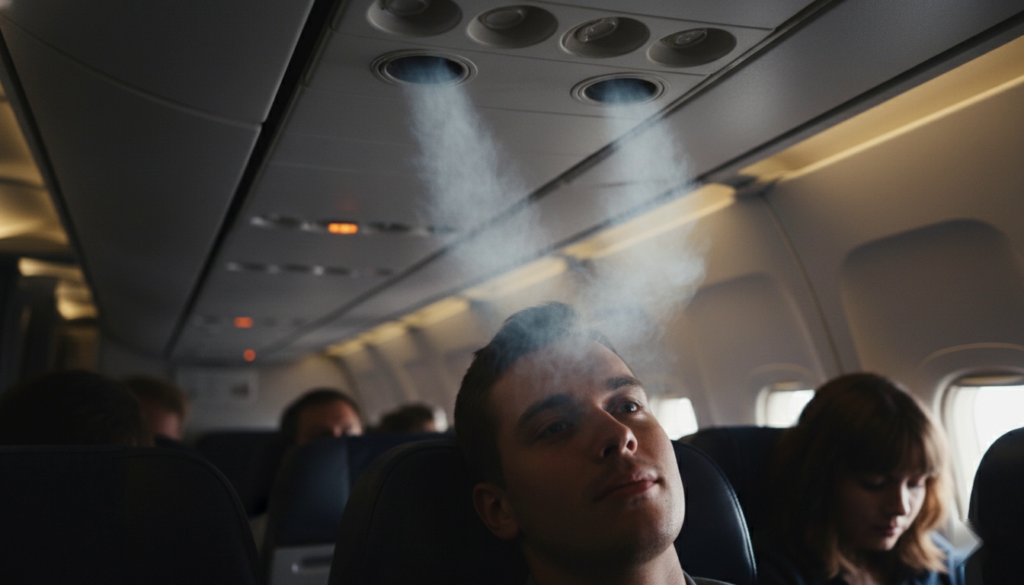
The “gasper” vent, which exists above your head, functions as the most effective tool that you possess to fight against jet lag. The open vent creates an individual “air curtain,” which protects your health by driving away nearby germs while delivering chilled air to your space.