 Isabella Miller
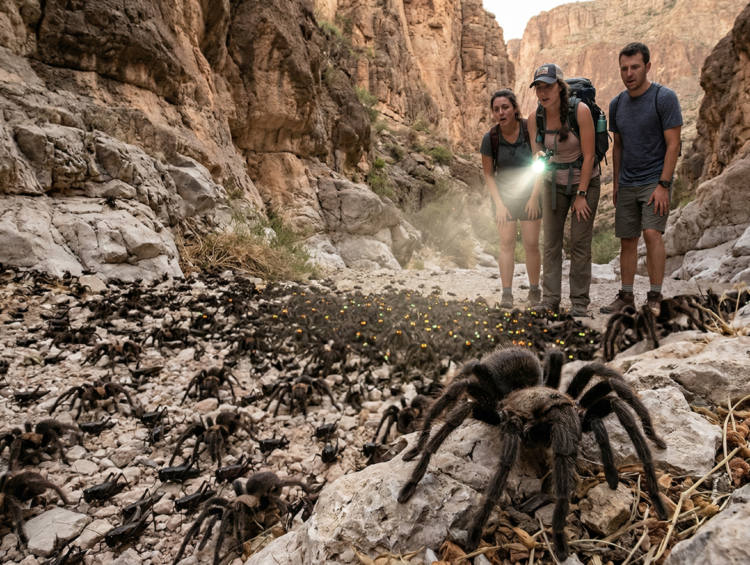
 The peaceful hiking pathways of Big Bend National Park transform into a wildlife documentary scene when animals from the surrounding area begin to appear. The Texas desert landscape uses the term “tiny animals” to describe two different events which include tarantula migrations and insect swarms that materialize without warning. The wildlife encounters reveal to hikers that they exist as temporary visitors within a natural environment which presents unpredictable conditions that become more frightening through its sheer number of wild animals.
The Autumn Tarantula Trek
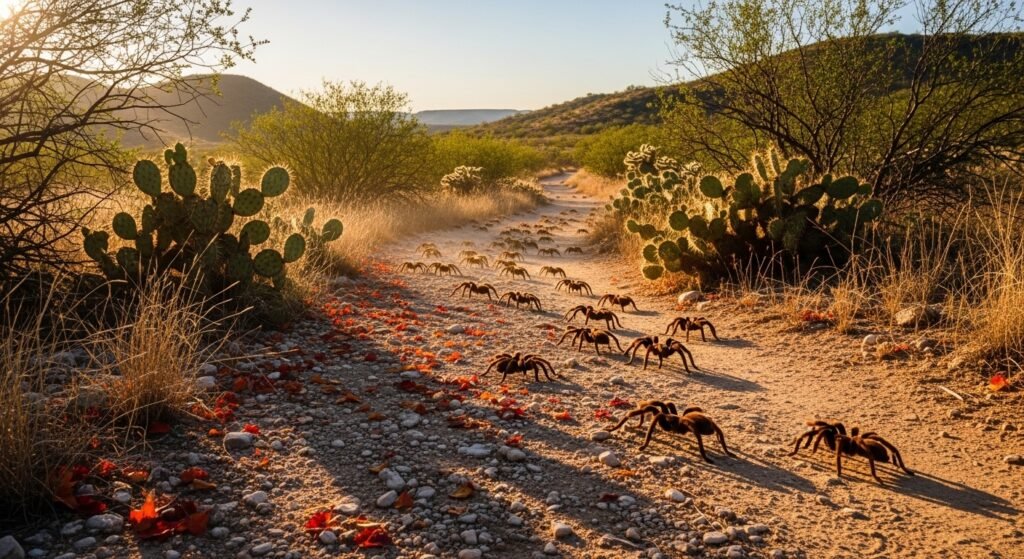
Texas Brown Tarantulas start their autumn mating season by emerging from their underground homes in West Texas. A single spider creates a small presence which leads hikers into the middle of a spider migration when hundreds of tarantulas cross the hiking path.
The “Vibration” Reaction
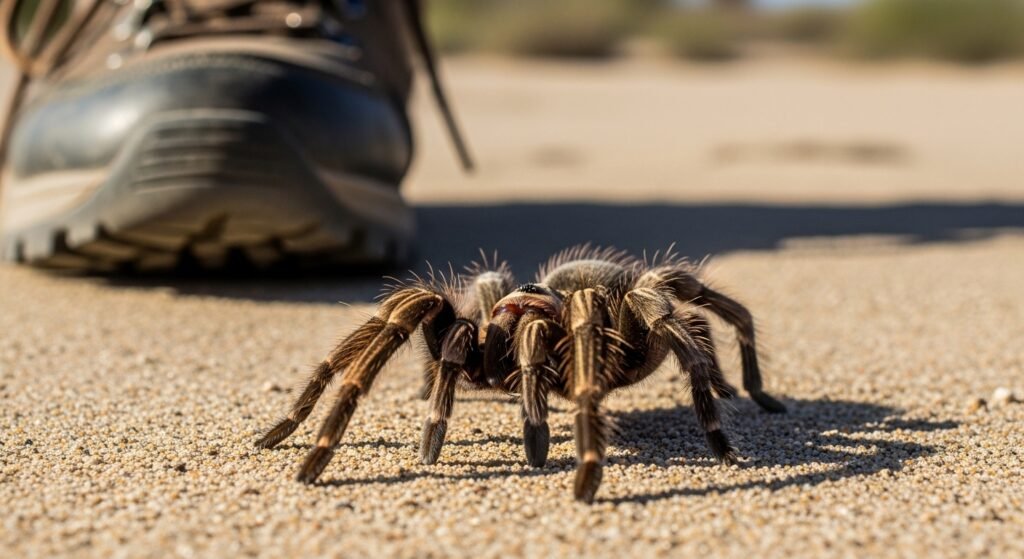
Tarantulas possess ground sensitivity which makes them vulnerable to earth tremors. The spiders will continue their movement if a hiker remains still but the sound of heavy hiking boots will stop hundreds of spiders from moving while they hide under nearby shadows which usually turn out to be the hiker’s feet.
The Rise of the “Creepy-Crawly” Swarm
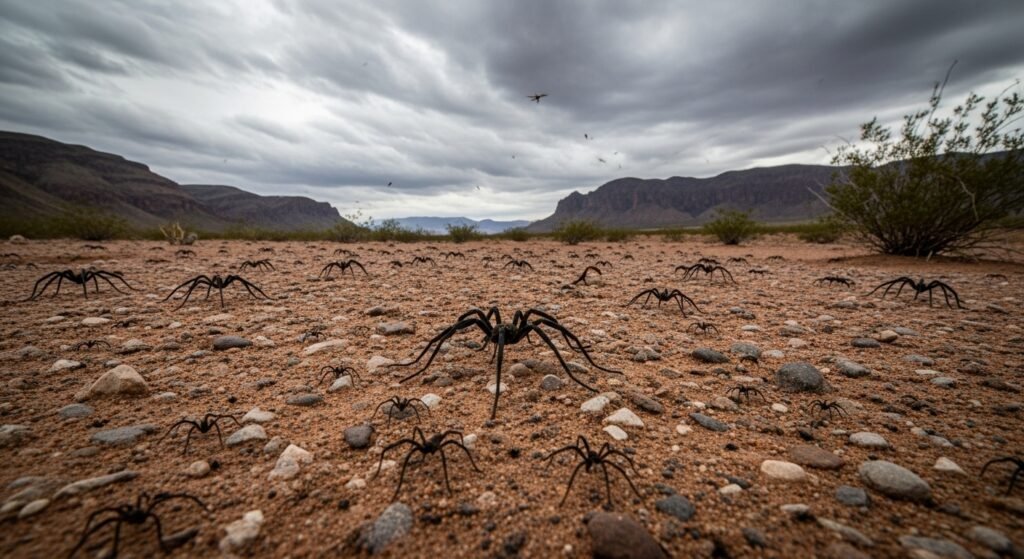
The 2023 Big Bend hiking population witnessed locals describe “nightmare” situations where the ground seemed to move. The desert rains which suddenly came forced thousands of insects and spiders to flee from their original locations because they searched for higher and drier areas which included the hiking paths.
The “Mormon Cricket” Invasion

Mormon Cricket swarms sometimes invade parks throughout Texas. The bugs, which possess shield-like backs and lack wings, can form an “army” that reaches up to millions, thus forcing their way through all areas of roads and trails while causing both the ground and air to emit a continuous single, rhythmic clicking sound.
Stuck in the “Spider Funnel”
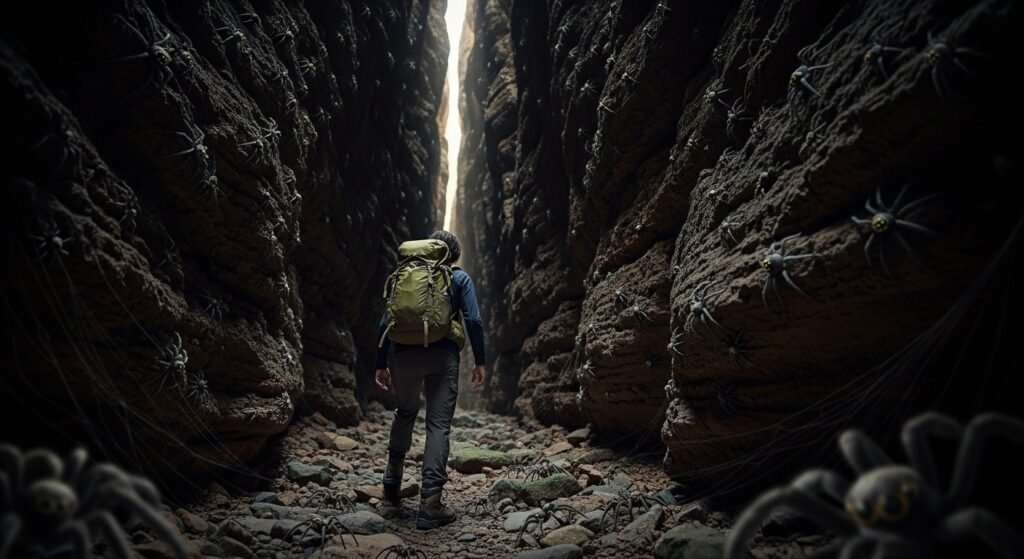
The shape of narrow canyon trails allows them to function as funnels that guide everything passing through them. In a migration situation, hikers who find themselves in a narrow passageway face an impossible choice between two bad options; they must either crush the “army” blocking their path or suffer through an extended period of frightening movement while they exit the area.
The “Social Media” Mirage

The majority of visitors who arrive at Big Bend National Park seek to catch a glimpse of black bears or mountain lions and the actual tourist experiences reveal that invisible tiny organisms which tourists did not expect to encounter cause them more severe trauma than the visible public military presence in travel brochures.
Protective Motherhood
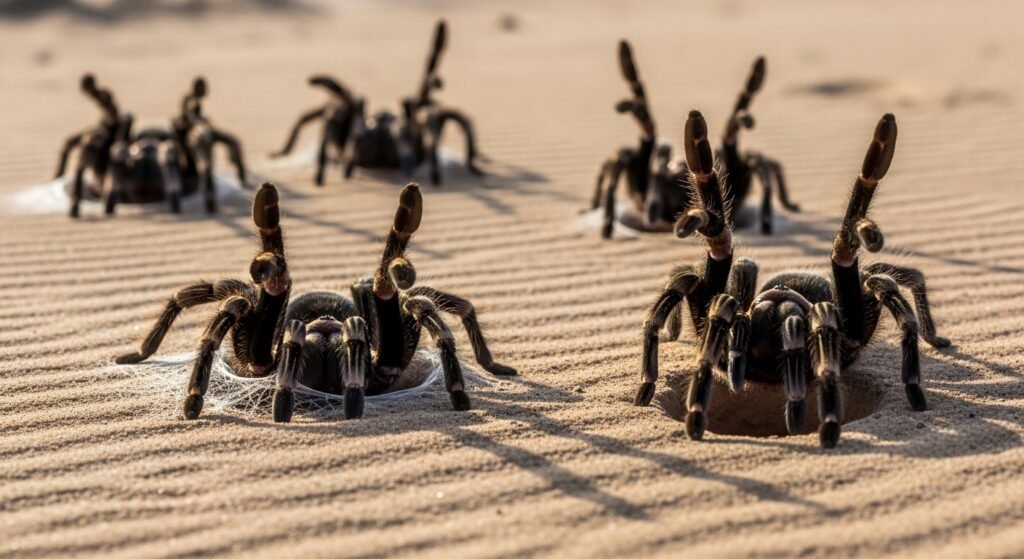
Male tarantulas wander their territory while female tarantulas remain inside their underground nesting areas. Hikers who sit close to a “colony” of active burrows will witness multiple female spiders emerge to fight for their territory, which creates a defensive barrier.
The Blind Spot Terror
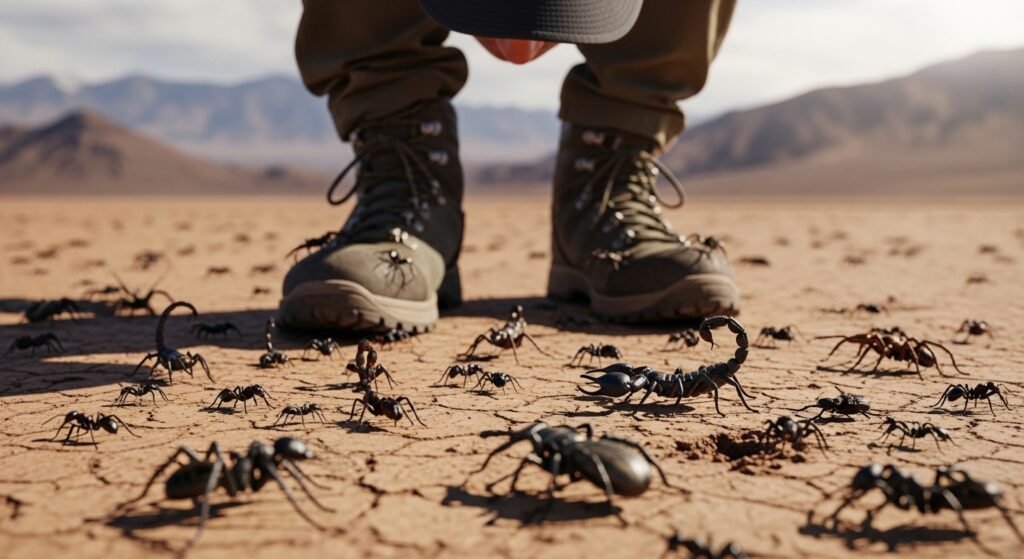
Hikers remain unaware of nearby desert animals until they finally check their surroundings. The moment hikers spot one insect, they discover that multiple insects exist within an arm’s length from them.
The Nighttime “Eyes”
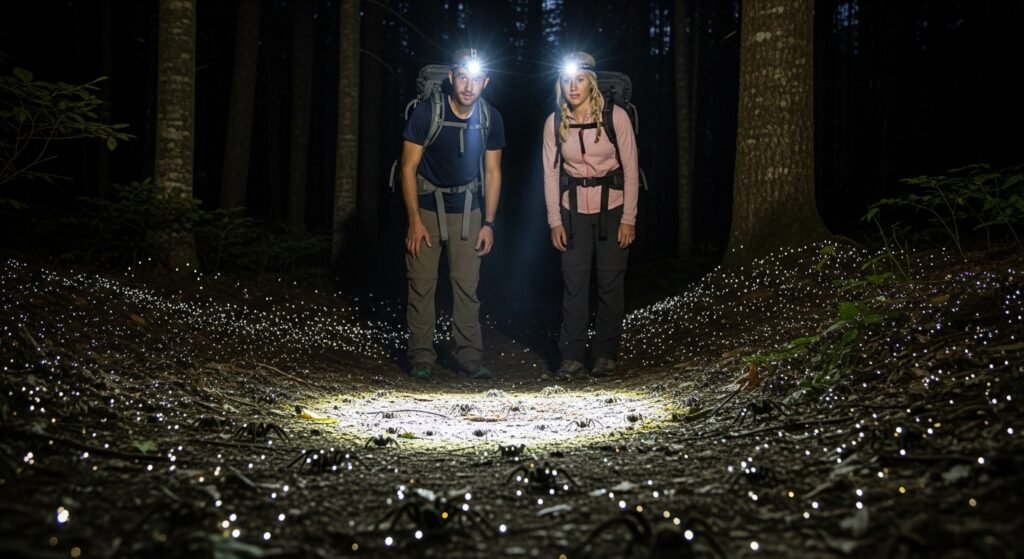
When hikers stay outside after dark, they discover numerous small sparkling objects which resemble “diamonds” on the ground when they activate their headlamps. Wolf spiders and tarantulas utilize the reflective eyes to demonstrate the total number of “tiny animals” hiding within the surrounding area.
The Lesson of Respect
The encounters create stories but the events seldom result in physical harm. The “nightmare” shows that the desert environment exists for various creatures which can endure 110°F heat, while humans merely act as transient visitors to this space.