 Sophia Davis
 The ongoing discussion about the health effects and culinary value of white sugar compared to brown sugar represents one of the most enduring nutritional debates of contemporary times. The people who eat these staple foods must learn to recognize their actual physical properties because food labels and processing methods will become more important to consumers in 2026. The two substances share more similarities in their scientific makeup than their marketing materials lead customers to believe because they have different colors and textures and flavors. The assessment of public misdirection requires analysis of sweetener products beyond their visual aspects since scientists must investigate their complete chemical makeup and production methods and practical uses.
Shared Botanical Origin
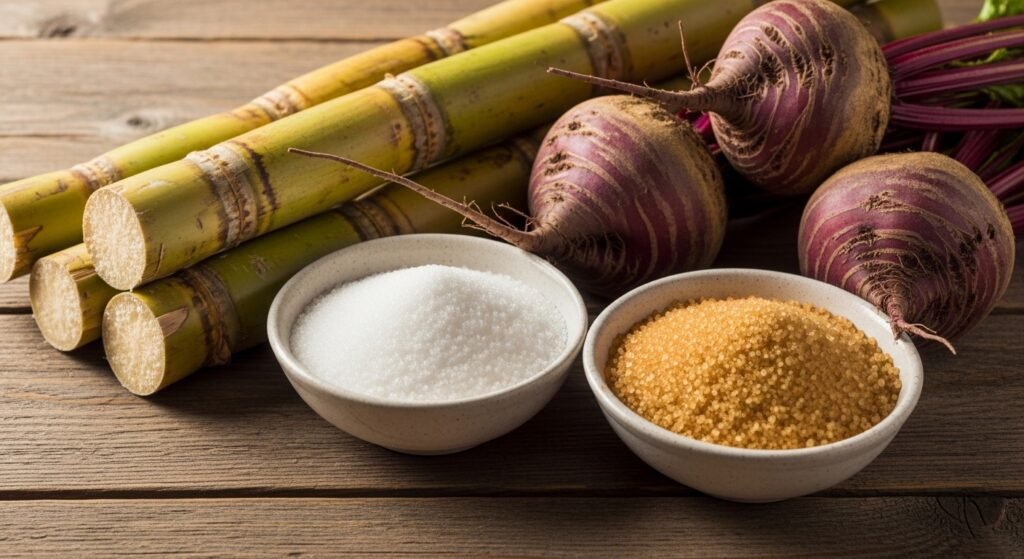
White sugar and brown sugar originate from the same two plant sources which include sugar cane and sugar beets. Both substances contain identical chemical structures because they consist of pure sucrose which maintains the same basic molecular form throughout the different color and crystal size variations.
The Role of the Centrifuge
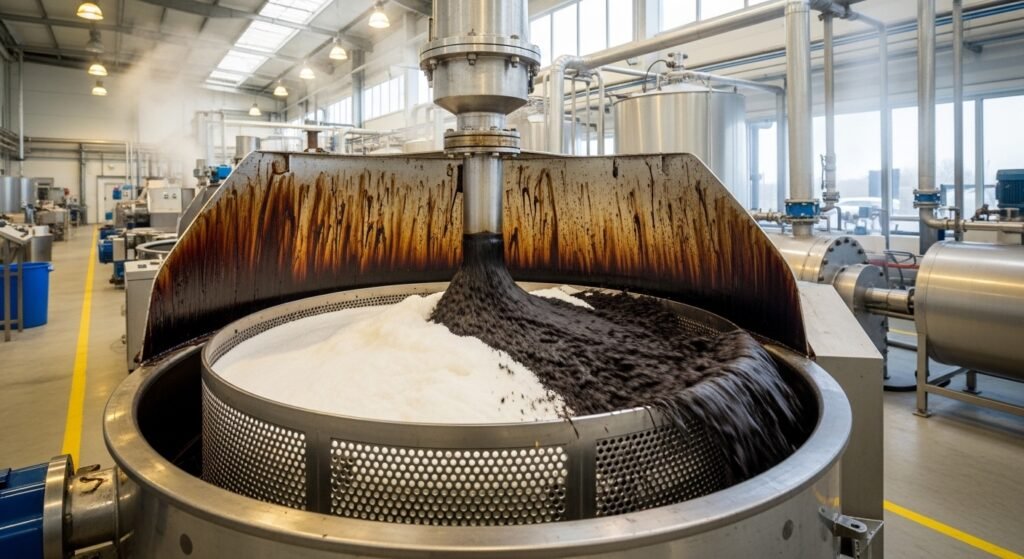
Production workers use the centrifuge to spin sugar crystals which results in the extraction of a thick dark syrup that is known as molasses. The process of making white sugar involves removing all syrup components which results in the creation of recognizable pure translucent sugar crystals.
Mineral Content Variance
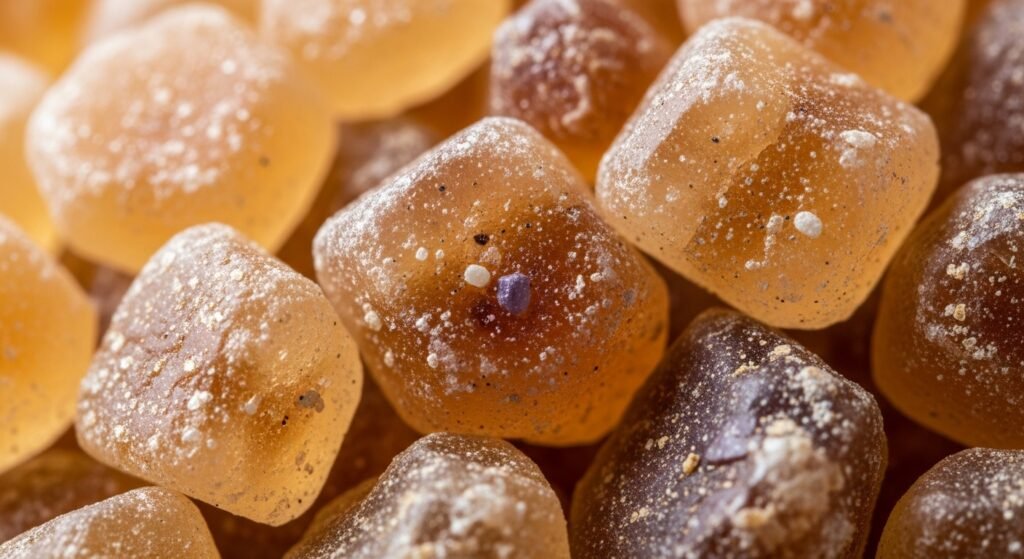
Brown sugar contains small quantities of calcium and potassium and iron and magnesium because molasses has trace mineral content. The quantities of these substances are so small that you must consume dangerous amounts of sugar to experience any substantial nutritional advantages.
Hygroscopic Properties
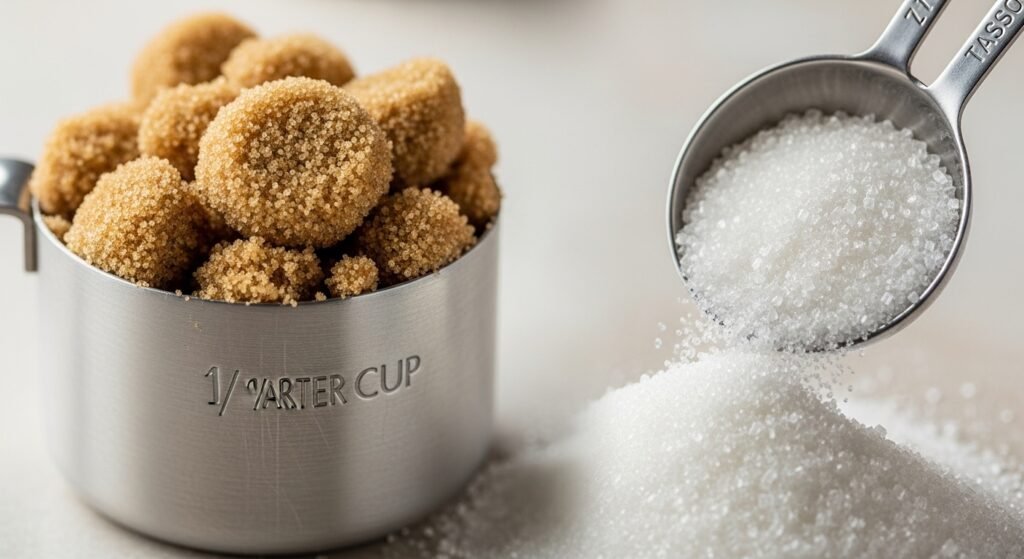
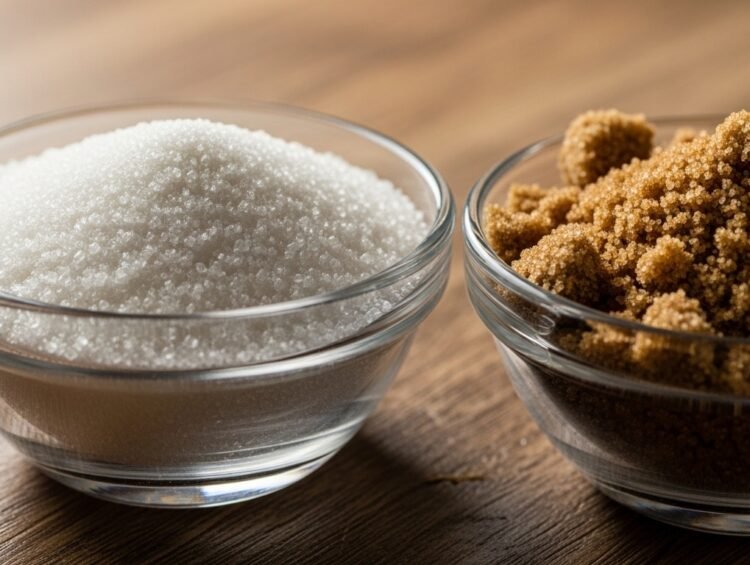
The natural hygroscopic quality of molasses causes it to attract moisture while holding onto that moisture. The clumping nature of brown sugar results from this property which keeps moisture from escaping while white sugar maintains its dry and flowing state. The physical characteristic of brown sugar causes it to take up space in measuring cups.
Impact on Baking Texture
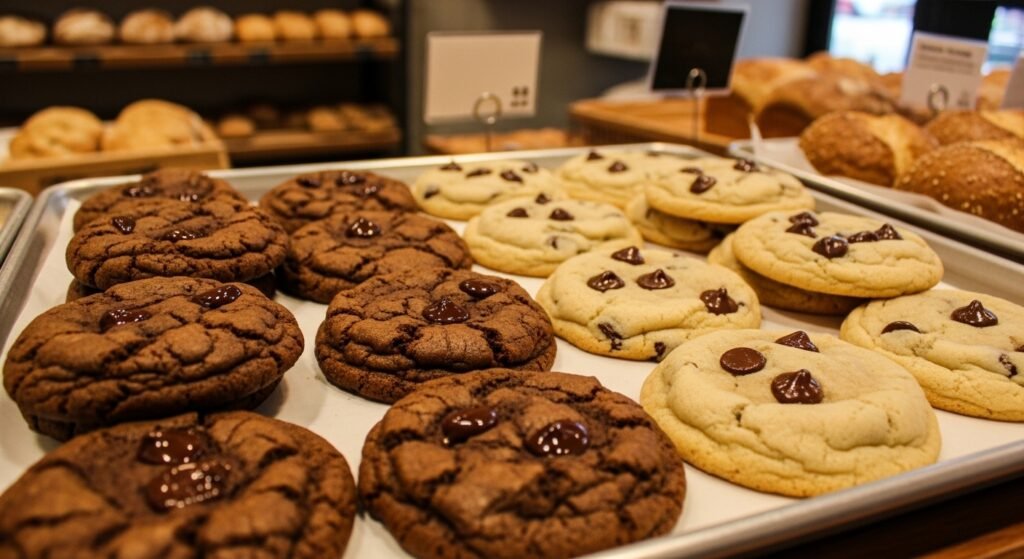
The moisture content of brown sugar creates a texture that is both denser and more moist while also producing a “chewy” consistency in baking products. White sugar creates a texture that is both crisp and light because of its dry properties. Professional bakers use both types of sugar to create desserts that have a specific mixture of crunchy textures and soft textures.
Acidity and Leavening
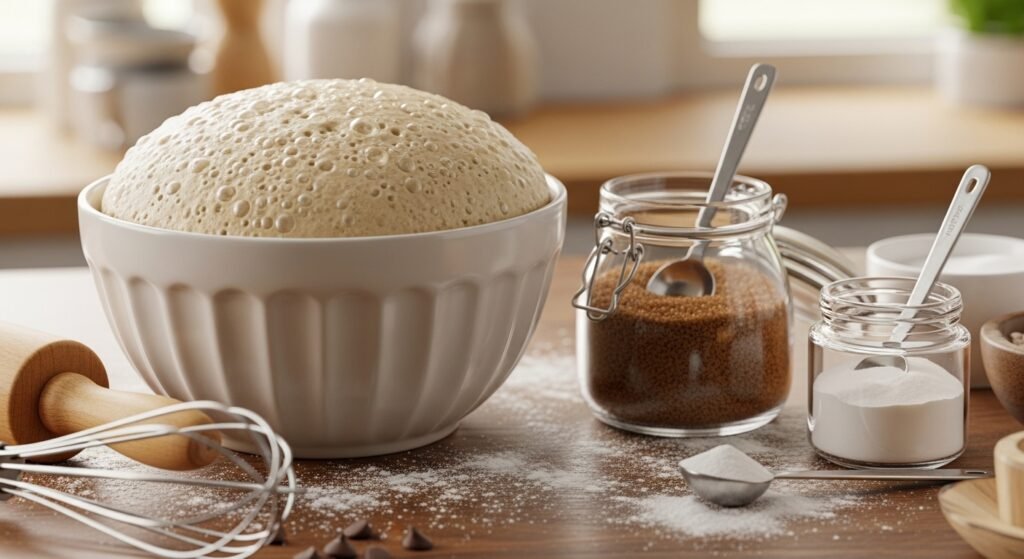
The pH of molasses contains a small amount of acidic properties. Baking soda functions as a base in recipes which, when combined with brown sugar, triggers a chemical change that produces carbon dioxide gas to assist in the dough’s upward movement. White sugar does not provide any leavening power because it has a neutral pH.
Commercial Manufacturing Habits
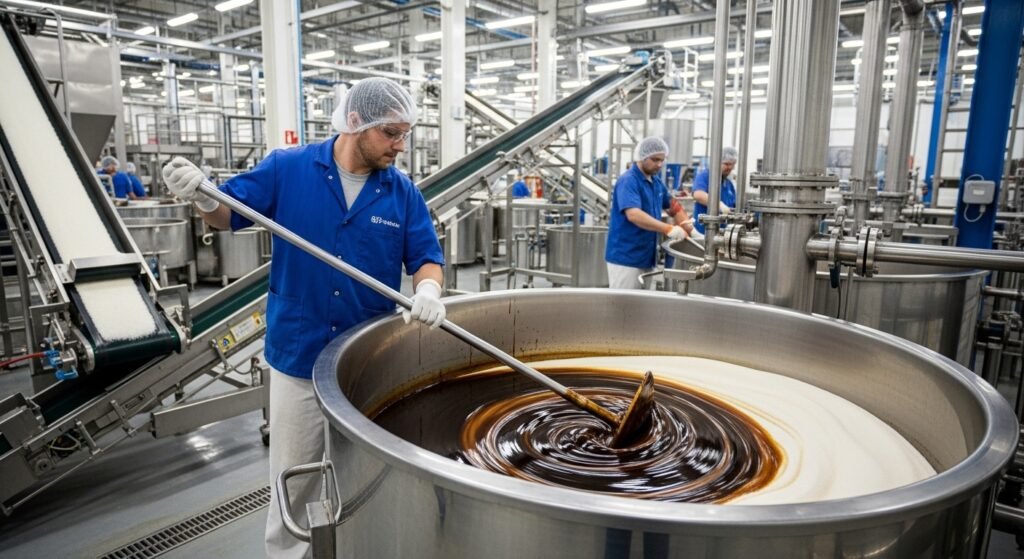
Commercial manufacturing of brown sugar involves the process of adding back molasses to white sugar crystals which creates a product that appears brown. The practice of adding back molasses grants manufacturers the ability to create products that maintain consistent color and flavor characteristics without depending on naturally occurring raw sugars.
The “Natural” Misconception
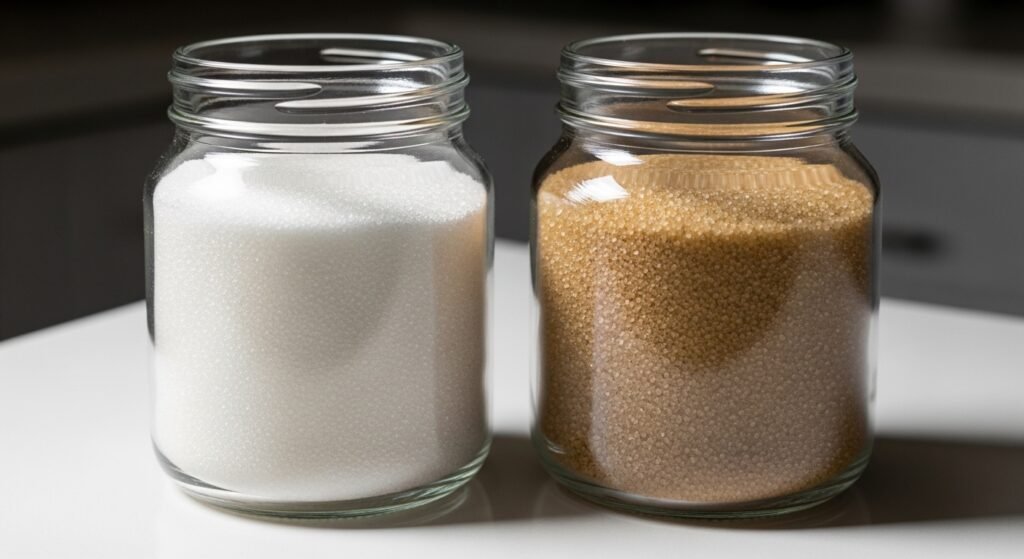
The public views brown sugar as being less processed and more natural compared to other sugars. The process of creating brown sugar involves adding molasses to white sugar that has been refined at an advanced level which makes it equally processed as white sugar.
Storage and Hardening
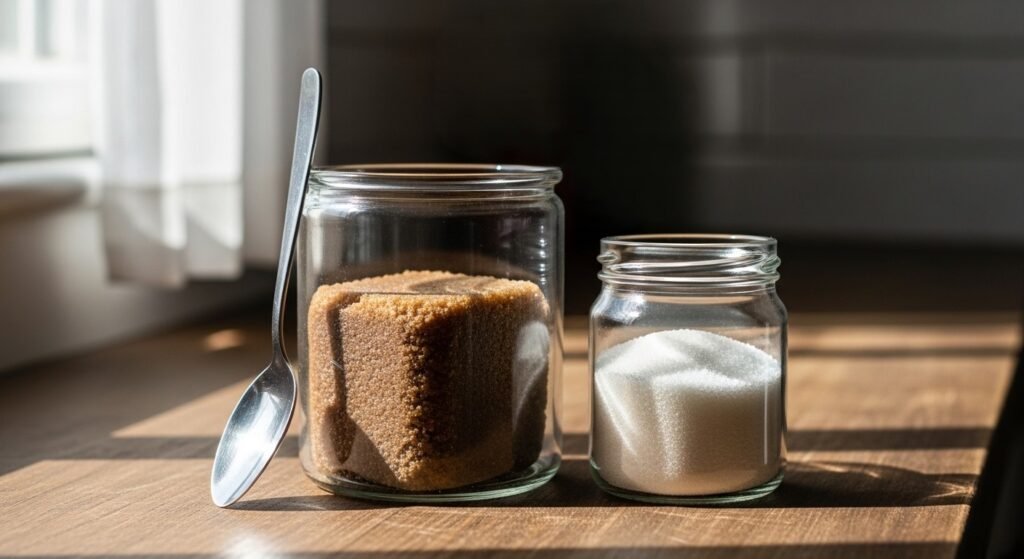
Brown sugar turns into a solid brick because moisture loss transforms its molasses content into crystalline form which binds the sugar into a solid block. The absence of moisture in white sugar enables it to remain stable throughout extended storage periods because no physical changes will occur.
Global Regulatory Standards
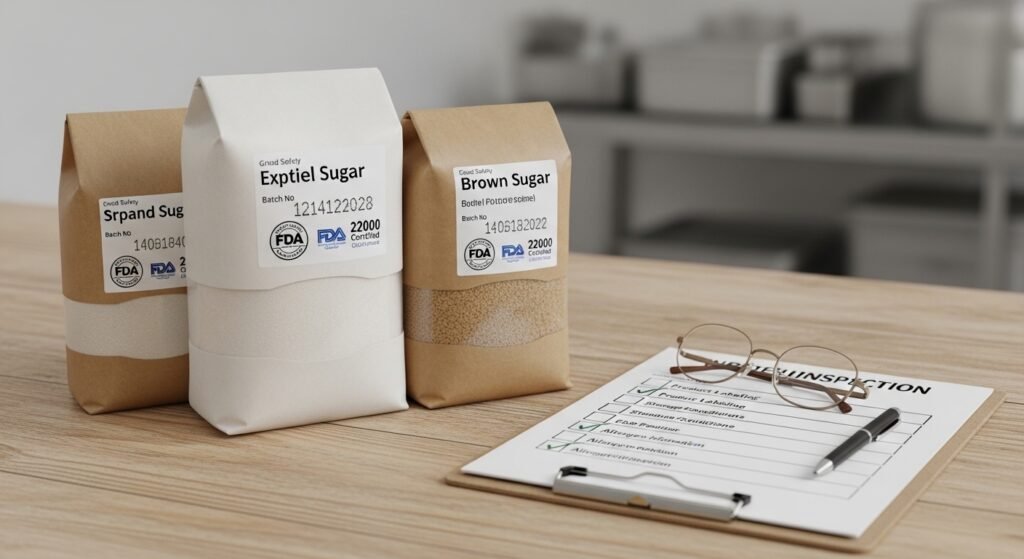
The food safety authorities of 2026 regard both types of sugar as possessing identical safety characteristics which require the same labeling procedures as other substances. Both sugar types lack health-related characteristics so people should choose between them based on culinary preferences and individual taste because neither offers health advantages over the other.