 Isabella Miller
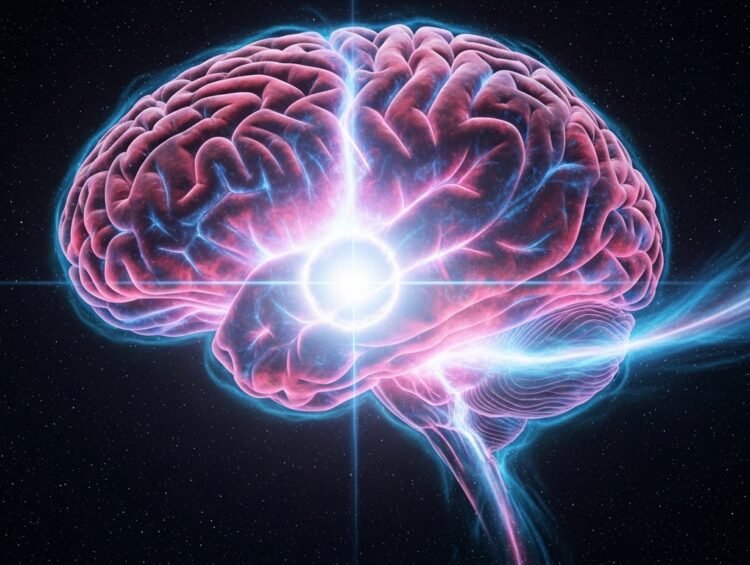
 The constellation Perseus contains a large gas and dust cloud which has caught public interest because it resembles a shining see-through human brain. The cosmic structure known as a “planetary nebula” represents the final colorful explosion of a sun-like star which creates beautiful nebulae. The universe demonstrates its ability to generate intricate designs which imitate living organisms through its combination of physics and light.
The “Cerebrum” Structure
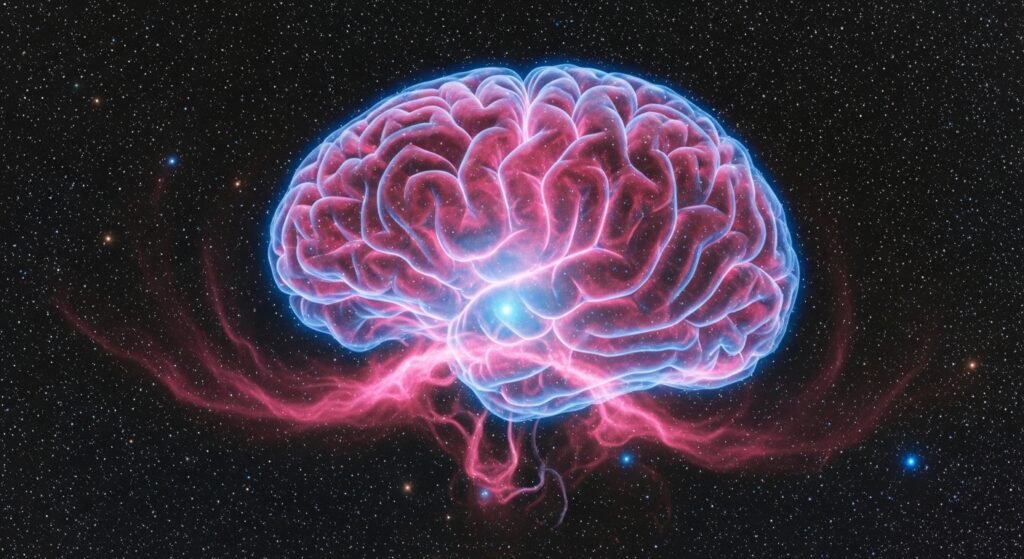
The nebula shows a brain cortex appearance through its rounded outer shell which has wrinkles. The outer shell of the nebula develops its shape through “stellar wind” forces which push gas forward in uneven patterns that create facial features similar to human gray matter.
The Glowing “Brain Stem”
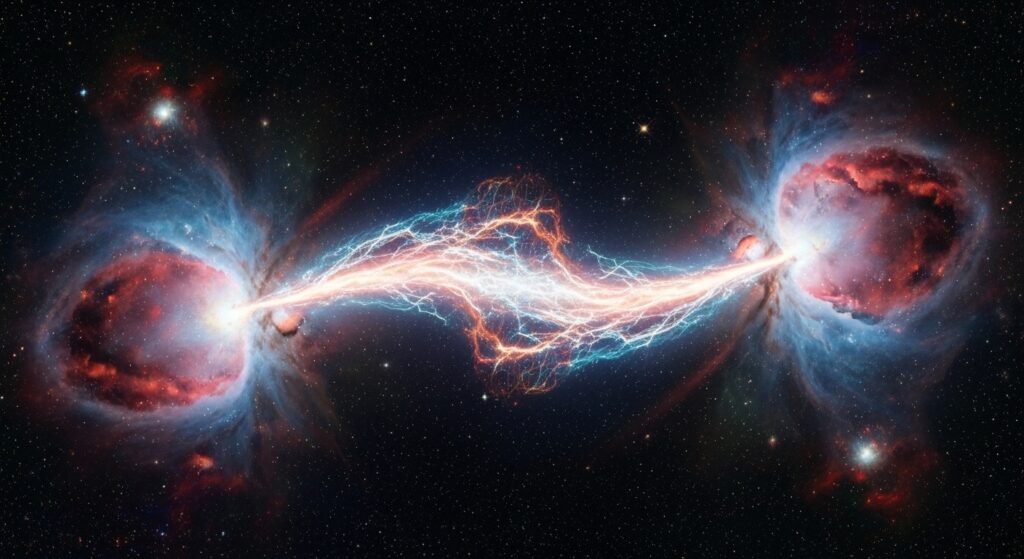
A bright ionized gas stream extends from one nebula section to another, which resembles a spinal cord or brain stem. The dying star creates space debris which follows its high-speed movement through the universe.
The Central “Pineal” Star
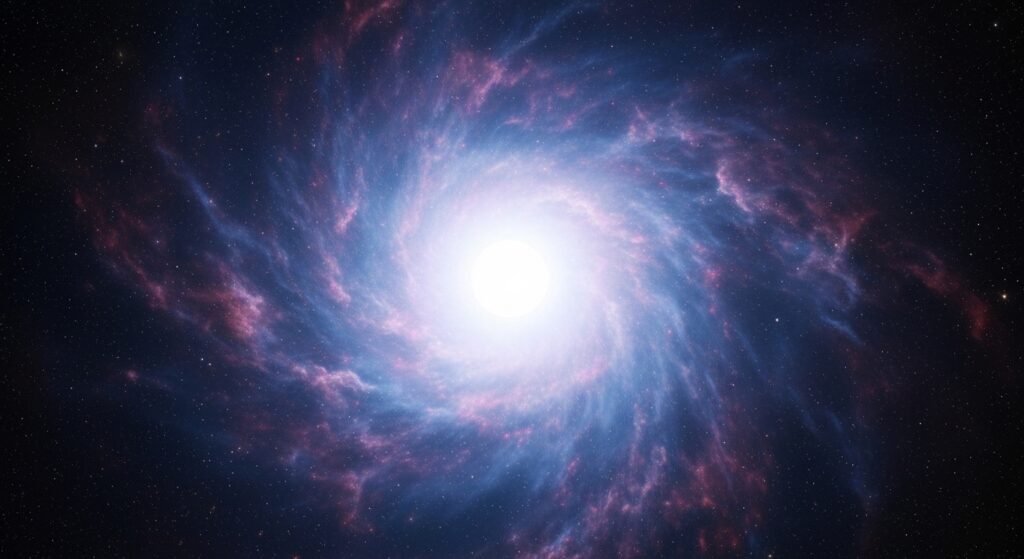
A tiny white dwarf star occupies the exact central point of the structure. The exposed core of a dead sun serves as the nebula’s vital essence which produces ultraviolet light to make the entire space brain illuminated.
Hemispheres of Gas
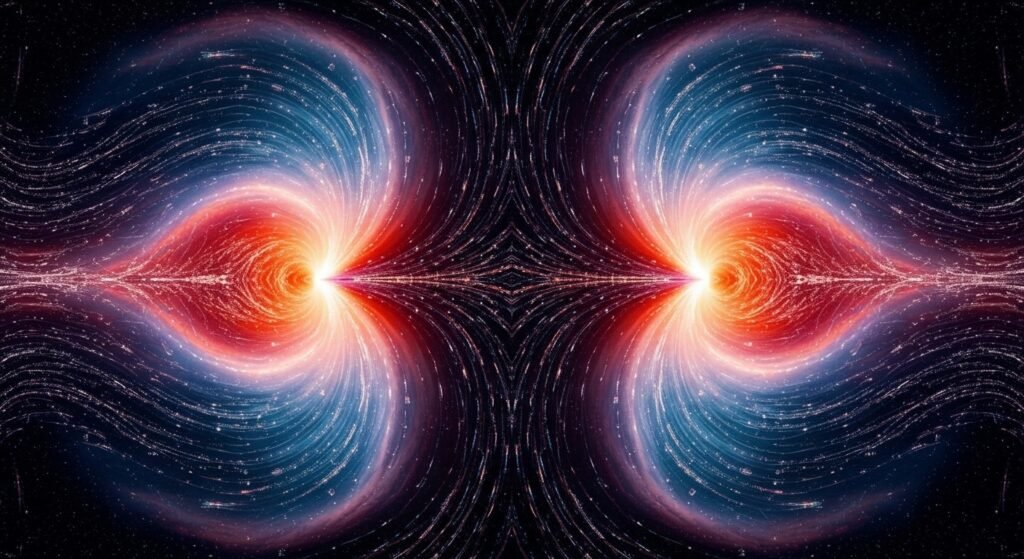
The nebula has two separate parts which resemble the brain’s left and right hemispheres. The dying star’s magnetic fields create symmetry, which directs its gas to flow in two opposite directions.
The “Thinking” Glow
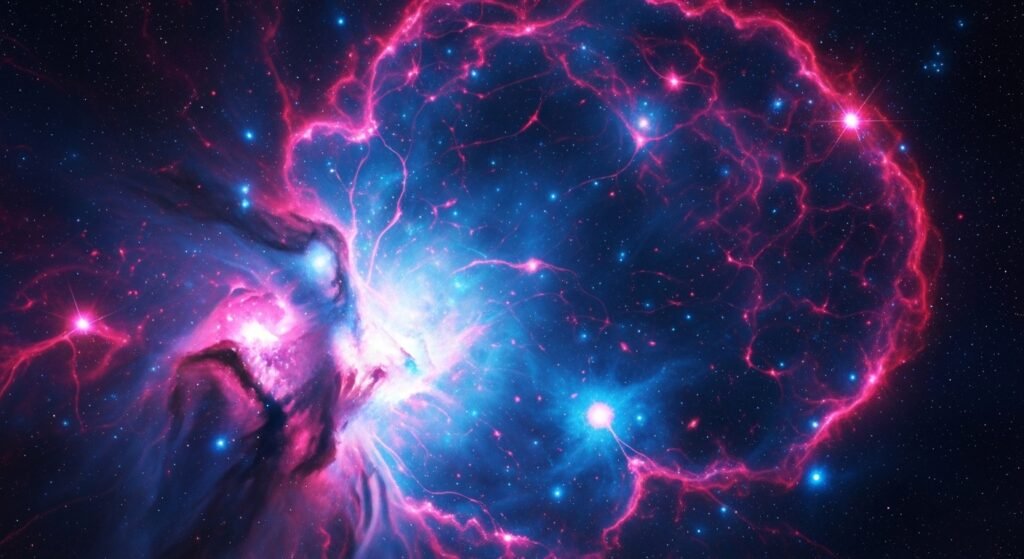
The pink and blue colors which appear mystical, act as actual hydrogen and oxygen indicators. The central star releases energy, which makes the gases “excited” to produce light, resembling the brain activity of neurons during thought processes.
A Ghost of the Future
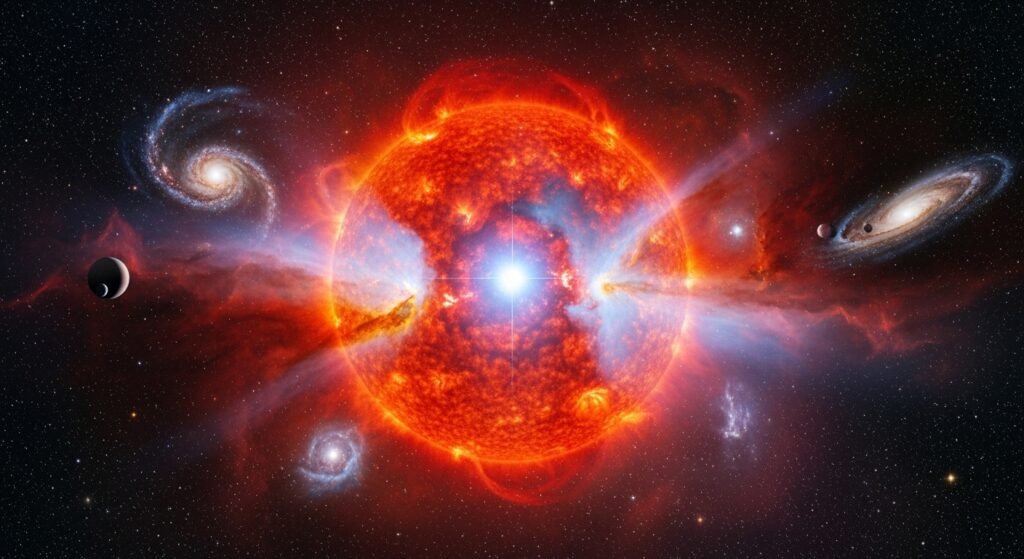
Scientists use this nebula to demonstrate the expected future of our sun after 5 billion years. The solar system will transform into a beautiful brain-shaped dust cloud, which serves as a preview of Earth’s eventual destruction.
Pareidolia in Action
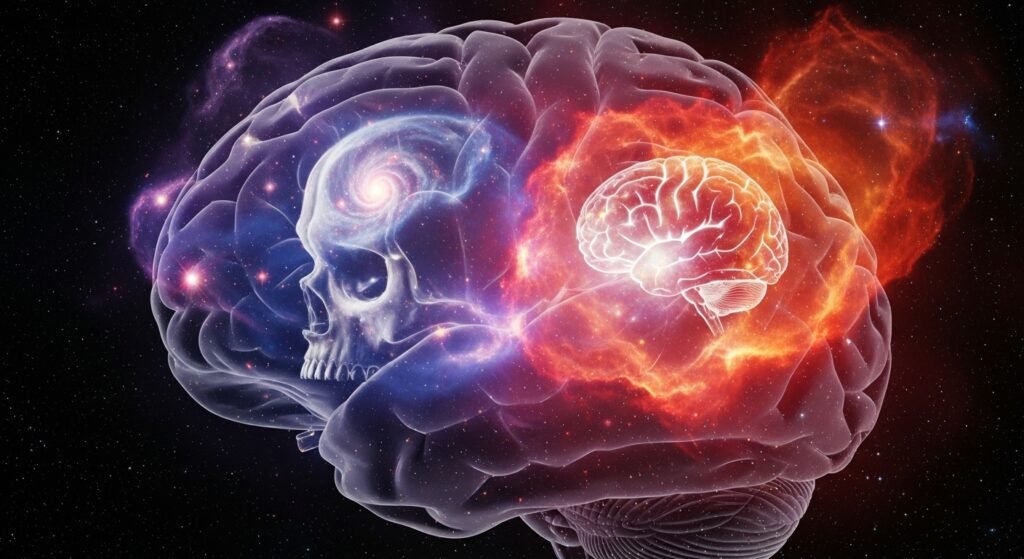
The “Exposed Cranium” demonstrates pareidolia because it shows how human brains identify familiar patterns within random data. Our minds associate the gas clouds with our own body structure, just as we perceive “The Man in the Moon.”
The “Thalamus” Core

The gas inside the folds has much higher temperature and density compared to other areas. The bright “inner core” creates a visual resemblance to the thalamus, which functions as the brain’s sensory processing center.
Cosmic Synapses
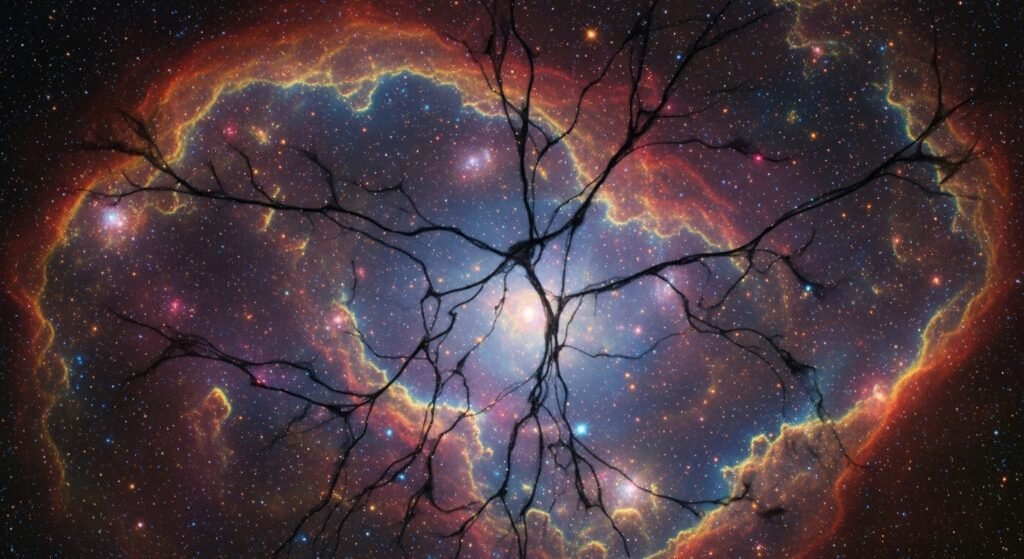
The nebula contains dark dust which forms thin filaments that create a nervous system appearance, resembling synapses. The areas which show cooler temperatures represent space where gravity starts to pull back gas, leading to the creation of new stars.
The 1,000-Year Pulse
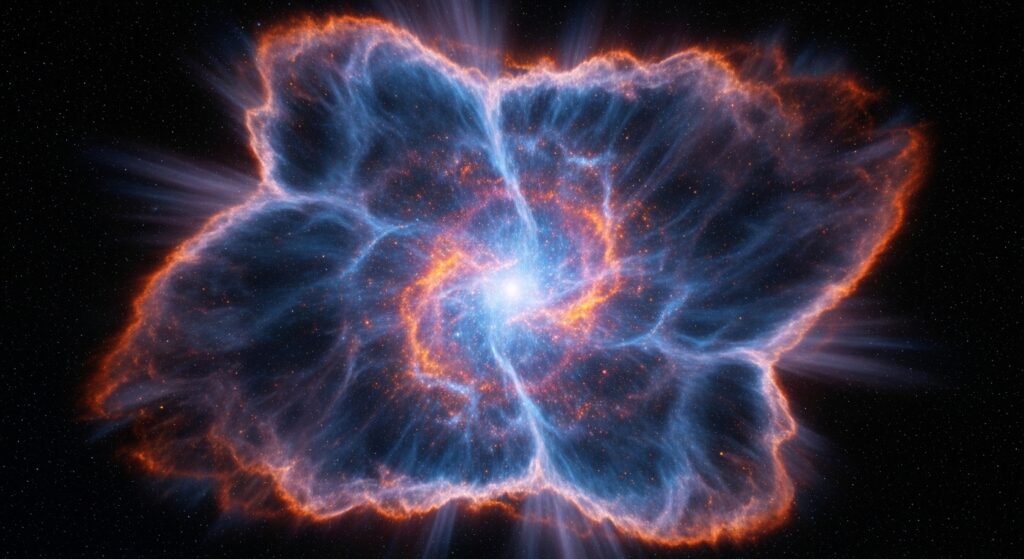
The brain wrinkles show the different periods which the star underwent during its life cycle. The star creates an observable “record” of its gradual death through gas emissions, which occur approximately every 1,000 years.